Help Scout and Missive solve the same surface-level problem: a team handling support, sales, or ops conversations from a shared inbox. They’re built on different premises. Help Scout is a help-desk platform with a knowledge base at its core, designed for support orgs that think in tickets. Missive is an email client with internal chat threaded into every conversation, designed for teams who want to work email together without leaving the inbox.
If your team would describe their work as “answering tickets,” Help Scout maps to that. If they’d describe it as “answering email together,” Missive maps to that. The rest of this comparison is the details.
How Help Scout and Missive actually differ
The architectural difference shows up in three places: how internal collaboration works, how channels beyond email are handled, and how the product scales as your team grows.
Internal collaboration. Help Scout has notes in a sidebar; coworkers @-mention each other to leave a note next to the conversation. Missive has internal chat threaded inside the conversation itself, in line with the email or message. The practical effect: Help Scout teams often spin up a Slack channel to actually discuss tickets, because notes alone get unwieldy fast. In Missive, the discussion lives where the work lives.

Channels. Both products handle email, live chat, Messenger, and Instagram. Help Scout adds WhatsApp on the Plus tier. Missive supports email, SMS (Twilio, SignalWire, Dialpad, Quo), WhatsApp Business, Messenger, Instagram, live chat, voice via integration, and custom channels via API. The bigger difference isn’t the channel list, it’s how the channels work together: Missive lets coworkers comment, assign, and draft on every channel inside a single thread, including across channels for the same contact. Help Scout treats each channel as its own inbox.

Per-seat scaling. Both are priced per seat. The difference is the curve, which the next section gets into.
Pricing compared
Help Scout has a free plan and three paid tiers (annual billing): Standard at $25/user/month, Plus at $45/user/month (the most popular), and Pro at $75/user/month with a 10-user minimum. AI Answers, the autonomous agent, is a separate $0.75 per resolution. Add-ons are real: extra inboxes are $10/month each, extra Docs sites are $20/month each, and HIPAA, SSO/SAML, and IP restrictions are add-ons on Standard and Plus.
Missive has three paid tiers (annual billing), with a 30-day free trial of Productive features first: Starter at $14/user/month, Productive at $24/user/month (where rules, integrations, AI, and analytics live), and Business at $36/user/month. There’s no per-seat AI add-on: AI runs on Missive AI credits or your own Claude, OpenAI, or Gemini API key billed by that provider directly, typically a few dollars per user per month.
For a 15-person team on the realistic working tier, the math:
- Help Scout Plus at $45/user/month: $8,100/year, before AI Answers and any extra inboxes or Docs sites.
- Missive Productive at $24/user/month: $4,320/year, plus AI usage (Missive credits or your own provider key) if you use AI.
The gap roughly doubles at 30 seats. Help Scout’s curve gets steeper if you need Pro features (HIPAA, SSO, dedicated CSM); Missive’s tops out at $36 for the Business tier with SSO and IP restrictions included.
Verified May 2026; spot-check current tiers before buying.
Where Missive fits better
Real internal chat inside conversations
Help Scout has notes; Missive has chat threaded inline with the email. It’s a small architectural choice with a big practical effect. Notes work for short context drops (“FYI, this customer is on the legacy plan”). They get awkward when a conversation needs back-and-forth between two coworkers about how to respond, because you’re scrolling between sidebar notes and the email itself. Missive folds the discussion into the conversation timeline, so the back-and-forth reads like a thread, not an annotation.
Multi-channel collaboration in a single thread
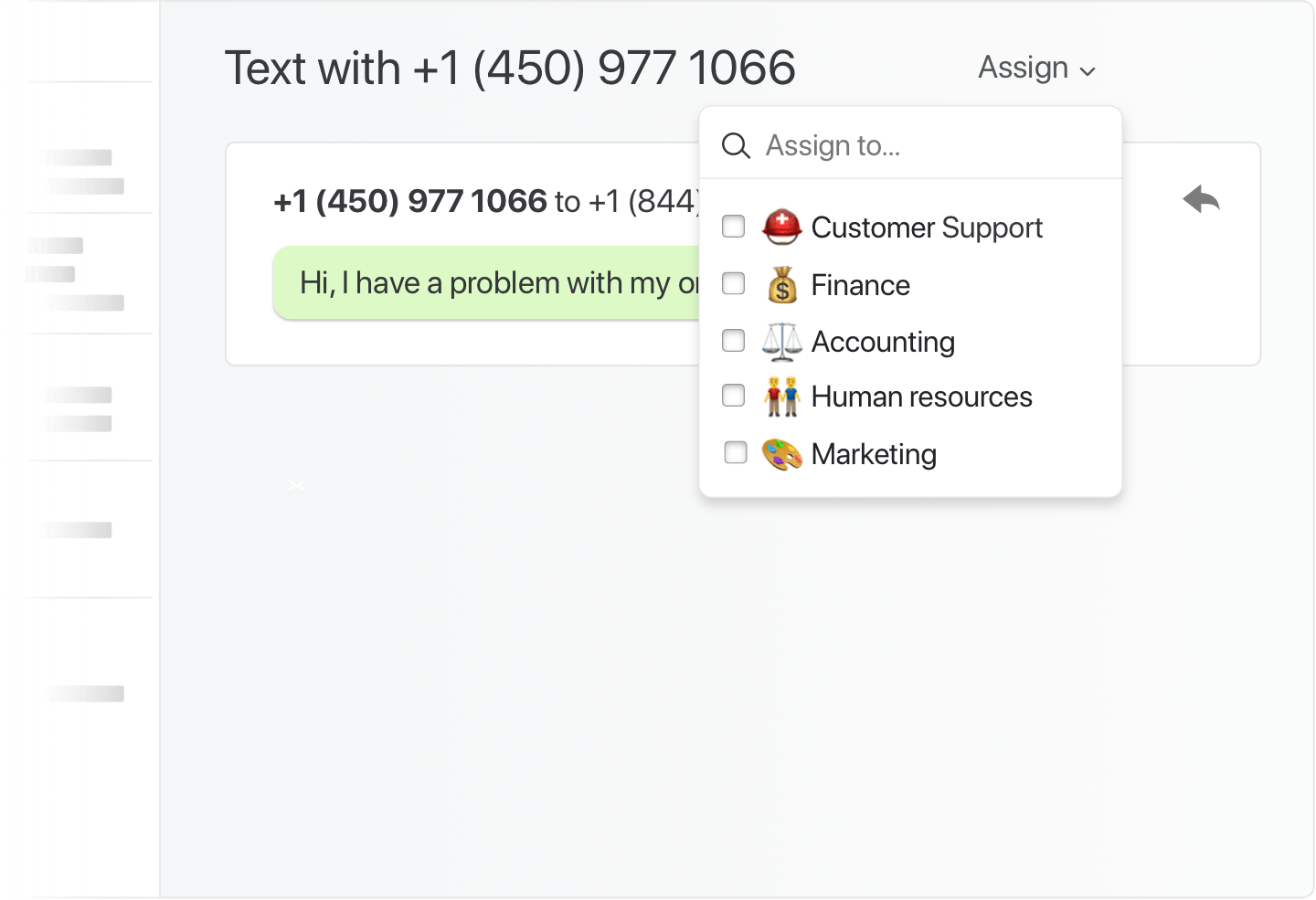
If a customer emails you on Tuesday and texts you on Friday, that’s two separate conversations in Help Scout’s siloed-inbox model. In Missive, those can live as a single thread tied to the contact, which means the coworker picking up the SMS sees the email exchange right there. Same goes for WhatsApp, live chat, Messenger, and Instagram. The team can comment, assign, and draft on any channel in one place.
Per-seat math that doesn’t punish growth
The teams we talk to who left Help Scout for cost reasons rarely cite the sticker price. They cite the curve. A team starting at five seats on Standard is paying $1,500/year. The same team at 20 seats, having moved to Plus to unlock the workflows, AI Drafts, and integrations they actually need, is paying $10,800/year. It’s not that any single tier is unreasonable; it’s that the tier you grow into is nearly double the one you started on. Missive’s Productive tier holds the line at $24/user with rules, integrations, AI, and basic analytics included.
An editor that handles real B2B email
Specific but it comes up: Help Scout’s email editor flattens pasted tables into images, which means anyone replying can’t edit the table in the response. For B2B teams that send proposals, status updates, quotes, or any structured data via email, that’s a daily friction. Missive composes in standard rich text with editable tables, the way most email clients do.
Live drafting with real collision detection
When two coworkers open the same conversation in Help Scout, the second one sees that someone is viewing it. In Missive, both can see the draft as it’s being typed, edit it together, or hand it off cleanly. Think Google Docs, but for email replies. For teams that pair-write sensitive responses, like sales handing a quote to a senior or support escalating a refund, this is the difference between coordination overhead and just working together.

Rules that work across every channel
Missive’s rules engine triggers on email, SMS, WhatsApp, Messenger, Instagram, live chat, and API posts. Conditions can include AI prompts (“if this message is angry, label it ‘urgent’ and assign to the senior on call”). Help Scout’s workflows are powerful for email but don’t extend natively to other channels.

Where Help Scout fits better
Three real strengths worth weighing if they’re central to your support strategy:
- Docs (knowledge base). Help Scout ships a built-in customer-facing knowledge base. You can author, organize, and host help articles without a separate tool.
- AI Answers. An autonomous AI agent that resolves customer questions from your knowledge base content and custom sources, billed at $0.75 per resolution. If “deflect routine questions before a human sees them” is your goal, this is the tool built for that. Missive’s AI sits inside the human workflow, helping a person draft, summarize, classify, and route, but it doesn’t autonomously close conversations.
- Beacon. An embeddable widget that combines FAQs, contact form, and live chat in one place on your site. Useful if a public help center is the spine of your support strategy.
Need a full ticketing system with SLAs and a public knowledge base out of the box? Help Scout, Freshdesk, or Zendesk are the tools built for that shape.
Worth noting: SLAs aren’t exclusive to help desks. Missive handles them through its Rules engine, with built-in templates for response-time tracking and tiered escalation. And while Missive doesn’t ship a built-in customer-facing knowledge base, you can connect external ones (Notion, GitBook, or any docs platform with an MCP server) so Missive’s AI assistant can draft replies grounded in your internal docs. Not out of the box, but flexible.
How teams typically choose
The pattern across teams who’ve evaluated both: the question isn’t really “which has more features.” Both have years of feature depth. The question is which mental model fits the work.
Teams who chose Help Scout tend to describe their work as support, with all the architecture that implies: queues, SLAs, ticket statuses, deflection metrics, a public help center. Teams who chose Missive tend to describe their work as a shared inbox where multiple people need to work email together, with support being one of several reasons (alongside ops, sales, account management, multi-account consolidation for solo founders).
Teams we talk to who switched from Help Scout to Missive describe a few recurring patterns: per-seat costs that scaled faster than expected as the team grew, notes that turned into a parallel Slack channel because in-line discussion was missing, editor gaps that hit a daily workflow (tables, formatting, attachments), and channels that felt siloed when customers actually moved between them.
None of those are reasons Help Scout is wrong. They’re reasons Help Scout’s shape didn’t match what the team needed.
Frequently asked questions
What is Help Scout used for?
Help Scout is a customer support platform built around shared inboxes, a built-in knowledge base called Docs, and an in-app help widget called Beacon. Teams use it to manage support email, run live chat, and publish self-serve help articles. It’s help-desk software, with tickets, SLAs, and a public help center as the spine.
What’s the main difference between Help Scout and Missive?
Help Scout is help-desk software. Missive is a collaborative email client. Help Scout treats every customer message as a ticket flowing into a queue with a knowledge base alongside it. Missive treats your inbox as your inbox, with internal chat threaded inside every conversation so coworkers can talk without leaving it.
If your team already works out of email and just needs to handle it together, Missive maps to how you work. If you want a formal ticketing system with a customer-facing help center, Help Scout is built for that.
Is Missive cheaper than Help Scout?
In most scenarios, yes. Help Scout’s annual paid plans run $25/user/month (Standard), $45 (Plus, the most common working tier), and $75 (Pro, with a 10-user minimum), plus $0.75 per AI Answers resolution. Missive’s annual paid plans run from $14/user/month (Starter) to $36/user/month (Business). For a 15-person team comparing Help Scout Plus to Missive Productive, that’s about $3,800/year in difference, before any Help Scout add-ons.
The gap widens as the team grows. Teams that started Help Scout when they were small often describe the same pattern: per-seat math caught up faster than expected.
What does Help Scout have that Missive doesn’t?
Three things, and they’re real differences worth weighing: a built-in knowledge base (Docs), an autonomous AI agent that resolves customer questions (AI Answers), and an embeddable help widget (Beacon). If a public help center is the spine of your support strategy, Help Scout fits that better.
- Docs, a built-in knowledge base for publishing customer-facing help articles. Missive doesn’t ship a native customer-facing equivalent.
- AI Answers, an autonomous AI agent that resolves customer questions from your knowledge base.
- Beacon, the embeddable widget that combines FAQs, chat, and contact in one place on your site.
Most teams that move to Missive pair it with a standalone docs tool and find the combination works. Missive can also connect to internal knowledge bases (Notion, GitBook, custom MCP servers) so the AI assistant drafts replies grounded in your team’s docs.
Does Missive have AI features like Help Scout’s AI Answers?
Yes, but they work differently. Missive includes AI for drafting replies, summarizing long threads, and powering AI rules that triage and route messages. AI sits inside the human workflow; a person still owns the conversation. Help Scout’s AI Answers is built to resolve customer questions without a human in the loop.
Different jobs. If your team specifically needs autonomous AI resolution of inbound questions, Help Scout’s AI Answers is the tool built for that.
Does Help Scout have a free plan?
Yes. Help Scout’s free plan supports up to 5 users, 1 shared inbox, 1 Docs site, and 100 contacts per month, but the caps fill up fast for any team handling real volume. Missive doesn’t have a free plan. Every new team gets a 30-day trial instead, with shared inboxes, internal chat, and the full Productive feature set, for up to 25 users and no contact cap.
Why do teams switch from Help Scout to Missive?
Four reasons cluster across the conversations we have with teams who’ve made the move: per-seat pricing scales badly as headcount grows, the email editor is missing things like editable tables, internal collaboration lives in a sidebar instead of the inbox, and channels (email, chat, WhatsApp) are siloed instead of unified.
- Per-seat pricing scales badly. Help Scout’s costs compound as headcount grows; the Plus tier nearly doubles the Standard tier ($25 to $45/user/month).
- Editor gaps. Things like pasting editable tables in an email, which Help Scout flattens to images. A real problem for B2B teams that send proposals, quotes, or status updates with structured data.
- No real internal chat. Help Scout’s notes sit in a sidebar, parallel to the email. Teams often run a separate Slack to actually discuss tickets. Missive threads internal comments inside the conversation itself.
- Multi-channel collaboration. Help Scout treats email, chat, and WhatsApp as siloed inboxes. Missive lets coworkers comment, assign, and draft together on every channel in one place.
Is Help Scout better for ticketing or for shared inbox workflows?
Help Scout is purpose-built for ticketing: a public knowledge base, AI Answers for autonomous resolution, and the ticketing workflow shape that traditional support orgs expect. Missive is closer to how email already works, for teams that primarily live in shared addresses (support@, sales@, ops@) and need to discuss messages without leaving the inbox. SLA tracking exists in both, with Help Scout offering it as managed policies and Missive handling it through Rules templates.
Quick gut check: if your team would describe their work as “answering tickets,” Help Scout fits better. If they’d describe it as “answering email together,” Missive fits better.
Want to see how Missive feels for your team? Start a free 30-day trial on Productive, no credit card required. Or keep comparing: Missive vs. Front, Missive vs. Spark.


