
About
Ficks Music is a retailer serving professional musicians who need access to rare and obscure classical sheet music, focusing on high-touch, expert service.
Company size
10-25
Industry
Music retail
Headquarters
Philadelphia, USA
Founded
2018
Missive use cases
When your customer service is too personal for help desk software and Gmail keeps breaking, you need a different solution.
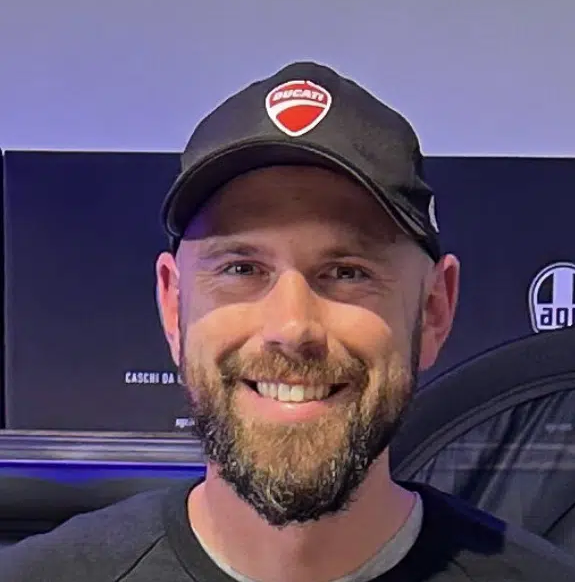
David Friedman didn't set out to revolutionize classical sheet music retail. He just wanted to play piano again.
"I was running tech startups, had a little too much time on my hands. I got back into playing piano, got curious about e-commerce, set up a site, and started reaching out to people," David recalls. "They wrote back saying, 'We don't want anything you're selling, but can you get me this, this, this?'"
That was 2018.
Today, Ficks Music serves professional musicians who need access to obscure classical repertoire that Amazon won't touch. It's a niche within a niche—the kind of market that requires genuine expertise and high-touch customer service.
"Our customers don't email a generic inbox," David explains. "They email their favorite team member. They call and ask for James specifically because James knows everything. This subtle difference—getting the right answer instead of an automated response—matters deeply to us and our customers."
After acquiring their largest competitor two and a half years ago, the complexity exploded. Suddenly they had two brands, multiple Google Workspaces, remote team members across four countries, and a tangled mess of email workflows that Gmail simply couldn't handle.
David had tried the conventional solutions (i.e. Zendesk). All the usual suspects that promise to streamline customer service.
"They all kind of sucked," he says bluntly. "We have complicated customer service, but we don't actually want to automate it. We don't want a chatbot giving incorrect AI answers. Our brand is that we're here, we know the answers, and that matters."
But here's the thing: customer service was just one piece of the puzzle. The team also needed shared access to accounts receivable emails (universities love sending eight people to pay a $10 bill), vendor communications, and order management. Help desk software was both impossibly expensive and completely useless for these non-customer-service workflows.
"When we acquired the other company, I'm looking at it going, 'We have a 500-person company problem with less than 10 people,'" David remembers. "Traditional help desk software was $50 per user just for customer service, and we still had this shared inbox problem everywhere else."
Gmail's shared inbox functionality is, charitably, not great. Once you enable two-factor authentication, you can't share email addresses. Multiple people forwarding messages back and forth creates chaos. Google Groups was "unworkable" after about eight minutes of trying.
"When you don't have a proper shared inbox, things are just being forwarded around and you soon have a giant mess," David says.
When David first found Missive, his reaction was predictable: "There's no way in hell I'm paying $30 per user per month on top of my Google Workspace."
But he took the free trial anyway.
"I logged in, connected accounts, created a shared inbox, invited a team member, and called my COO. I said, 'We're going to spend $30 per user because this solves 100% of our problems today.'"
What made the difference? Missive provided the functionality they actually needed—shared inboxes with proper collaboration features—without the bloat and expense of help desk software they'd never fully use.
"It's product-market fit at 100%," David says. "We're not doing customer service at the scale where we can really get value out of Zendesk's fancy features. We needed a decent shared inbox that worked across multiple domains and business functions."
The real test came with an older colleague who'd refused to use Gmail and clung stubbornly to Outlook.
"He was older than me, more gray than me, not comfortable with technology," David explains. "He thought Gmail was non-intuitive and made no sense. I was like, 'Alright, what are we gonna have to do to get him to do this?' Because it's a bit all or nothing."
David walked him through setting up Missive, half-expecting resistance. Instead, he got a call the next day.
"He was like, 'This is great. How do I get all my accounts in here?'" David recalls, still sounding slightly amazed. "He interpreted it as having everything he liked about Outlook while solving actual problems. I was like, 'Okay, that's a damn good product right there.'"
That horizontal appeal—working for both tech-savvy programmers and change-resistant Outlook devotees—validated David's decision.
Today, Ficks Music runs its entire email operation through Missive. The team has access to distinct inboxes for:
By using aliases routed to separate Missive inboxes, they segmented communication for multiple business lines without increasing Google Workspace user accounts. "We were able to do what we wanted to do in a way that wasn't increasing our price every month," David notes.
But the real game-changer? Inline commenting and tagging.
One colleague who'd been a heavy Slack user at his previous company put it simply: "This is so much better. I don't need to switch contexts."
"When you're in Gmail and you want to discuss an email with your team, you have to forward it or screenshot it or jump to Slack," David explains. "In Missive, I can have that conversation inline. It's all there, it's sequential, I can give visibility without anyone knowing. It's like commenting in Google Docs, but for email."
What Missive allows that Gmail fundamentally doesn't is the separation of users and inboxes.
"This is really important," David emphasizes. "We can have different team members access different combinations of inboxes based on what they need. Someone might need read-only access to look up vendor information. Someone else needs full access to multiple customer service inboxes. Gmail just can't do that organizational flexibility."
Ficks Music operates in what David calls "compounded niches"—obscure items within an already niche market. About 50% of their orders are special requests for rare pieces, often imported from European publishers.
"We keep about 20,000 items in stock daily," David says. "But every day stuff goes out that we've either never sold before or had to special order. It would be impossible to stock everything people need."
This complexity requires sophisticated inventory management, custom code, and international shipping coordination—challenges that appeal to their team of programmers who include a former data scientist for the Brazilian government.
"My guy in Brazil says this is so much harder than his government work," David laughs. "They both love it because it makes no sense. You're running a business where you don't have stock. Everything's custom. You're dealing with international shipping for single items. It appeals to anybody who likes tech stuff because it's so human, but you can only do it if you have real programmers who love the products and customers."
The analog nature of physical sheet music combined with digital complexity creates exactly the kind of business that needs tools like Missive—human-centered collaboration for complex workflows.
For Ficks Music’s 11-person team spread across Philadelphia, California, Brazil, Paris, and Belgrade, Missive has become the central nervous system of their communication.
"I went both feet in right away," David says. "I was like, five Gmail tabs versus one Missive tab? Done."
The transformation has been comprehensive enough that David can't imagine going back.
"I want to write a comment to my wife when I'm in Gmail and I'm like, 'Why do I have to forward this? This is insane,'" he admits. "Even for personal stuff, the workflow has completely changed for the better. I can't go back."
The company continues to grow, starting new lines of business and expanding internationally, all while maintaining the high-touch, personalized service that makes them special in their niche.
"We're never going to compete with Amazon on popular items," David says. "But for these compounded niches, for customers who went to music school and need access to obscure repertoire, we're here. We know the answers. And now we have the tools to deliver that service efficiently."
.jpg)
A conversation with
David Friedman
·
Owner

Kason Knight
i-SOLIDS
·
10-25


Pat Petrini
PPG Property Management
·
1-10

Oliver Schönbett
Eshop Guide
·
50-100

Benoit Laurent
Worders
·
10-25

David Price
Avenue Systems
·
10-25

Jane Hart
DataChef
·
10-25

Sunny Jaggi
Cedar Consulting Group
·
10-25

Jacob Shadbolt
Ice Panel
·
1-10

Jennifer Brown
Canex Global
·
10-25

Estelle Besson
Morning
·
100-250

Marc Adam
Nixa
·
25-50

James Thurlow-Craig
Create
·
1-10

Eddie Dalrymple
Lionize
·
25-50

Kendra Edelman Smith
Weekly Accounting
·
50-100

Jeremy Cai
Italic
·
100-250

Rob Bettle
Sound Quiet Time
·
1-10

Mike Moniz
Wulf's Fish
·
25-50
Ondrej Vymetalik
Canary Ride
·
10-25

André Loja
Tabaibo
·
50-100

Alex Collins
Canonbury Group
·
100-250

Simon Tye
Gigatronix
·
10-25

Shiran Nicholson
Nicholson Events
·
1-10

Zack Buchman
Uncute
·
1-10

Laura Christian
All Star Cleaning Services
·
50-100
David Friedman
Ficks Music
·
10-25

Sarah Hum
Canny
·
10-25

Austin Twede
Novak Conversions
·
10-25

Eric LaFleur
LaFleur & Laborde
·
25-50
.png)
Jacob Bank
Relay
·
1-10

Cédric Waldburger
Tomahawk
·
1-10

David Lipovsky
Trama
·
50-100

Norman Lee
Wonoak
·
1-10

Stephanie Ragusa
Lighting Dynamics
·
50-100

Thibaut Tiberghien
Smplrspace
·
1-10

Bobby Andrews
A La C.A.R.T.E. Solutions
·
50-100

Cecee Penney
The Academy School
·
25-50

James McGlade
Growth Alliance
·
1-10

Richard Ludlow
Hexany Audio
·
10-25

Benny Rubin
Senders
·
10-25

Arif Gozel
Gozel Law
·
10-25

Chris Wattinger
Scale CPA
·
10-25

Freedom Doran
22 IMPACT
·
1-10

