
November 10, 2022
Distribution List vs. Shared Mailbox: Which One Should You Use?
Distribution list or shared mailbox, which should I use? What are their strengths and weaknesses? This blog...
Should I use (or still use) a distribution list or a shared mailbox? We get asked this question a lot, and although some say that it depends on your business needs, I say most businesses should opt for a shared mailbox over a distribution list. Let me explain.
Let’s start with understanding what they are and how they differ.
What is a Distribution List?
A distribution list is a method using a single email address to send emails to multiple people at the same time. Using a maintained list of email addresses, you can send emails to all recipients without having to use CC or BCC to manually enter all the addresses.
Companies have been using distribution lists mostly as a visibility hack and workaround. They want a group of people to see emails sent to a particular email address, for example, a support team getting emails from a shared mailbox (support@company.com).
The original email is replicated and sent to all the members of the list. The lists can be managed easily to add or remove recipients.
It's great for sending out information, but not for collaborating, coordinating a discussion, or even staying on top of the actual email thread.
Distribution lists were created in the early 1980s as a way to share news about certain subjects such as wine tasting. Like an email blast from your favorite blog, distribution lists were not meant for two-way communication aka. when you respond to emails and the visibility stops.
What Are the Disadvantages of Distribution Lists?
Distribution lists sounds like a great solution, but what about replies? This is where the email management all goes south. You have no way of knowing who has answered which incoming emails, what they said, or what they responded to.
This leads to duplicate responses, sending clients conflicting information, or simply not answering some messages at all.
This is where the second layer of hacking comes along. Businesses start developing intricate labeling systems on top of their distribution lists to keep track of who's working on what.

I've heard about these labeling chaos situations countless times. Those systems work at first, but you cannot scale much with them.
When Diane joined in 2014, we created a distribution list that went to both of us. It worked fine because we were small, but as we kept growing, the system became inefficient. - Canex Global
I've heard about these labeling chaos situations countless times. Those systems work at first, but you cannot scale beyond a couple people when you're relying on distribution lists and labels to stay in sync.
Simply put, distribution lists were not designed to be used for collaborative email management or in team setting.
Distribution lists are great for sending information or content to a lot of people at once, like a newsletter or internal communication for example, that don't require anyone to respond to emails or have open communication. They can be set up in Gmail (Collaborative Inbox) or Microsoft Outlook (Shared Mailbox), or into a marketing tool that will enable you to take advantage of segmentation.
What is a Shared Mailbox?
A shared mailbox is a mailbox that multiple team members can access simultaneously. Each member maintains a personal email account, but they all can "send as" and read messages from a particular email address.
Shared inboxes are a step up from a distribution list as they enable communication and collaboration around emails.
For example, Amy (amy@acme.com) and Lucy (lucy@acme.com) can receive and send messages from the shared mailbox address help@acme.com. They can reply using their personal accounts or use the shared address.
Users with access to the shared email inbox will be able to see and manage the mailbox from their personal account under their personal inbox. When an email is deleted from a shared inbox by a user, it will automatically be removed from the shared mailbox of all other users.
Contrary to distribution lists, most shared mailboxes offer collaborative features. For example:
- Ability to know who sent which email from a shared address
- Ability to assign messages to specific team members
- Ability to send canned responses or templates
- Ability to send from different email aliases with different signatures
A shared mailbox solves all the pain points presented by distribution lists.
- You promote accountability in the team
- You stop sending conflicting information to customers
- You add a notch of professionalism to your business belt by not responding twice or, even worse, not responding at all
How to Set Up a Shared Mailbox?
Setting up a shared mailbox isn't complicated. Most email clients offer some sort of shared inbox functionalities, however, as we'll see later the tools to manage share mailboxes don't offer all the same functionalities.
To create a shared mailbox in Google Workspace, you can either delegate an account to team members or use a Collaborative Inbox within Google Groups. Both enable team members to have access to shared email aliases and reply to messages, however, Collaborative Inbox enables teammates to collaborate around emails.
If you're using Outlook, you can create a shared mailbox to give permission to team members to view, edit and send emails using share email aliases such as support@company.com. You should note that shared mailbox in Outlook aren't available on mobile device.
Missive Team inboxes are shared mailboxes made for collaboration and assignment between team members. It is useful for teams who want a "triage" step that will clean up messages for all coworkers at once and for teams who want the ability to see read/unread status at an individual level instead of an email level.
Allowing you to answer the question: Is David working on that email? Without ever having to ask David.

You can set it up easily by creating a team and giving it access to the email address or email account that you want to share.
Distribution Lists vs. Shared Mailboxes: Which One Should You Use?

If your goal is to collaborate on incoming emails in a team setting, 10 out of 10 times go for the shared mailbox option. On the other hand, if your only goal is to broadcast information and you're not expecting replies, go for the distribution list.
Businesses with customer support, sales, or any other customer-facing teams will benefit the most from centralized emails coming into shared mailboxes, as it will enable better collaboration and make sure every team member are synchronized.
You can find very affordable ways to create distribution lists, whereas shared mailbox solutions tend to be a little more expensive. There's a reason for this; one was made with collaboration in mind, and the other is mostly a message forwarder.
What are some Disadvantages of Shared Mailboxes?
Mostly the added cost. Email wasn't mean to be a team activity but modern day business is a team sport so your out-of-the-box inboxes won't have very good shared mailbox functionality. Which means, if your business runs off of email inquiries and requests, you'll want software that is purpose built for collaborative teams and shared mailboxes.
Shared mailboxes are also the wrong tool for one-way communication, that's where distribution lists shine.
Which Shared Mailbox Tool Should I Use?
If you are looking for the best shared inbox software for your team emails, I suggest having a look at our guide.
As always, there are plenty of collaboration tool solutions out there. If you are looking for the barebones, most people start with Gmail's Collaborative Inbox or Outlook's Shared Mailbox but if you're working with a lot of volume, you might need a purpose-built collaborative inbox and they are not all created equally.
Try Missive for free
Depending on your needs, some features and functionalities might be more important than others, but being able to collaborate around shared emails is the most crucial aspect of a shared inbox tool.
Basic tools like Outlook or Gmail don't compete with a powerful tool like Missive. Sure they offer basic collaboration functionalities like labels and assignments, but with them, you won't be able to chat with coworkers inside an email conversation or compose an email collaboratively.
Considering a shared inbox tool with more advanced features can help your business offer better customer service, especially to those who process high volumes of emails every day.
No matter what tool you decide to use in the end, following shared inbox best practices will help your team collaborate smoothly and boost productivity.
A Better Solution to Distribution Lists
Missive is much more than a simple shared inbox medium; it's a collaborative inbox tool that empowers teams to collaborate around email and other channels of communication like SMS, WhatsApp, Messenger, and live chat.
It can be used in various scenarios in all areas of a business.
In addition to the shared inbox experience, you will also get access to these great features:
- Internal chat
- Live drafting
- Tasks and assignments
- Shared calendars
- Rules and automation (including AI)
- Canned responses
Bringing a distribution list or shared address into Missive is a guided setup: shared addresses have a dedicated section under Settings > Accounts that walks you through connecting the address step by step.
Book a demo to see how Missive can help your business.

November 4, 2022
How to manage a shared mailbox: 8 best practices for collaborative teams
Shared mailbox best practices from real ops, support, and accounting teams. Assign owners, coordinate in-thread, set SLAs that actually hold.
Quick Answer: Managing a shared mailbox well comes down to three things. Every conversation needs an owner. Your team needs a way to coordinate without cluttering the customer thread. And the inbox needs rules that escalate anything sitting unanswered too long. Without those three, you get duplicate replies, dropped emails, and no audit trail.
There's a moment in every team that switches from individual inboxes to a shared one when cracks start to show. Replies get missed. Numbers stop matching across team members. People wonder, quietly, whether they can trust the system they were asked to learn. That's the real cost of an unmanaged shared mailbox: not just dropped emails, but dropped confidence in the tool itself.
The shared mailbox best practices below come from real teams that worked their way out of those cracks. Three problems show up almost everywhere: the duplicate reply (two people drafting the same email), the ownership vacuum (everyone can see it so nobody owns it), and the audit trail problem (something goes wrong and there's no record of who did what).
Why do shared mailboxes break down, even when teams mean well?
Definition: A shared mailbox is an email address (support@, hello@, ops@) that multiple team members can read from and reply on behalf of. Unlike a distribution list, replies happen from a single shared address. And unlike a personal inbox, ownership of any given conversation has to be explicitly assigned, or it's nobody's.
Most teams don't fail at shared mailboxes for lack of effort. They fail because visibility alone isn't a system. When everyone can see every email, the default assumption becomes "someone else will get to it." That assumption multiplies, and conversations nobody flagged get buried under the next morning's volume.
The duplicate reply is the most embarrassing failure mode, but the ownership vacuum is the most expensive. A customer sends a quote request to ops@ on Monday. Three people see it, none of them claim it, and it surfaces Thursday when the customer follows up to ask why nobody responded. That's lost revenue, not lost time.
What does it actually cost when the shared mailbox is unmanaged?
The cost is concrete. Take Kyle's team at McRae's Environmental Services, a 70-year-old hydrovac operation in Western Canada. Six people work the dispatch desk, handling roughly a thousand emails a day across an Outlook shared mailbox. Before any best practices were in place, the team would scan the inbox each day and try to empty it before they left. Easy jobs got picked first. Harder ones, the ones needing coordination across operators or specialty equipment, got pushed aside. Some never came back.
Kyle's framing was direct: every missed job is missed revenue. Anywhere the shared inbox sits between an external request stream and an internal fulfillment stream, a missed email is a missed deliverable.
What does a well-run shared mailbox workflow look like?
The shared mailbox best practices below build on each other. Skip one and the next gets harder.
1. Document the process before you touch the inbox
Before configuring rules, assigning owners, or building labels, write down how you actually want the team to handle email. What constitutes a same-day reply? Who escalates billing questions? What's the tone standard? Without that document, every team member improvises, and the output looks chaotic to customers because the process is chaotic internally.
2. Assign every conversation, don't let anything sit unowned
This is what separates "we have a shared inbox" from "the shared inbox works." Every conversation needs a named owner. Visibility without ownership is the ownership vacuum. The model that works for most operational teams is specialty-based assignment.
At McRae's Environmental, Kyle's team assigned by the kind of work each email represented. Invoicing went to the finance person. Hazardous waste jobs went to the operator who handled that line. Video sewer inspections went to Kyle himself. The result, in his words: it's visual in front of his face, he can't miss it, it doesn't get lost. That's the qualitative shift the practice should produce.
The mechanics are the same in any decent shared inbox tool: assign at triage, keep an "unassigned" view as the daily backlog, and watch it trend toward zero by end of day. In Missive specifically, an assigned conversation jumps to the top of the owner's inbox, which makes it harder to forget.
Two setup traps worth flagging:
Know exactly what each action does. Every tool has its own verbs (assign, close, archive, send-and-close, snooze, task) and they don't all do the same thing across tools. In some, closing a conversation also closes its task; in others they're separate. Takaya, who runs accounting at Brunner Accounting, hit a version of this in Missive when a customer reply landed in a colleague's view rather than the team inbox: send-and-close had moved the conversation while leaving the task open. Her summary works as a universal warning: there are three plates running (conversations, tasks, and who's assigned) and you have to pay attention to all three.
Test your rules against real inbound mail. A common silent failure across rule-based inboxes: a rule looks correctly configured, fires fine in testing, then quietly does nothing in production because it's scoped to the wrong account or inbox. Yiyi at Stack AI ran into this when her organization rules worked but her personal ones wouldn't. Jaci, who runs a six-person accounting firm, hit a related version: her rules looked correct, but her personal account wasn't shared with the organization, so the org rules never fired on her inbound mail. After you set up rules in any tool, run a few real-world tests and watch what actually triggers.
3. Coordinate inside the thread, not in Slack
The single most reliable predictor of whether a team's shared inbox practices stick is whether internal coordination happens inside the email thread or somewhere else. Teams that coordinate in-thread build the audit trail they always say they want. Teams that coordinate in Slack lose context every time they switch tools, then drift back into forwarding emails to each other (the practice the shared inbox was supposed to replace).
The architectural rule working teams converge on: contextual comments live inside the conversation they're about. Ambient team communication (wins, general updates, water-cooler chat) lives in a dedicated chat channel or team room. Blurring those two creates a comment thread that becomes its own inbox.
Rob, who runs a private music school, describes the discipline plainly: anything to do with business should be on email so it can be labeled and tracked, not diluted in a separate WhatsApp chain. He replaced his agent's WhatsApp group with a pinned conversation in Missive for that reason. Brett and Kendra at Weekly Accounting follow the same rule, leaving comments and tagging each other daily for visibility on what each of them is working on.
Whatever tool you choose, look for one that puts internal comments inside each email conversation, not in a separate chat surface. In Missive, every conversation has an internal chat panel where you can @mention teammates without forwarding the email; the mention puts the conversation in their inbox with full context preserved. The architecture is the point: comments stay attached to the email they're about.
4. Set SLA alerts before you need them
A service level agreement (SLA) is a commitment to respond within a defined window. The shared mailbox version is usually a self-imposed rule: if an email has been sitting for X minutes without a response, escalate it. Done well, SLA rules surface conversations before the customer notices they were dropped. Done poorly, the alerts fire constantly and the team learns to ignore them.
What matters more than picking a threshold is understanding the three ways SLAs break silently after configuration, even when the rule looks correct.
Auto-responses don't stop the timer. Teams that send an automated acknowledgment ("Thanks for your email, we'll be in touch within an hour") often assume that satisfies the SLA. In most tools, including Missive, it doesn't. The timer started when the customer's email landed, and it keeps running until a person replies or the conversation is resolved. One support manager we worked with almost shipped an SLA configuration that would have given her dashboard a clean read while customers waited hours past breach.
Business hours have to match actual operating hours. Most shared inbox tools (Missive included) let you measure SLA timers in business hours, so the clock pauses overnight and on weekends. But the setting has to match reality. The same support manager had business hours set to 8 AM through 6 PM while her team's actual hours were 7 AM through 5 PM. Two hours of dashboard fiction every working day.
Know what action actually stops your SLA timer. Tools differ on this. In some (like Front), replying stops the SLA. In others (like Missive), you have to assign, close, or otherwise resolve the conversation explicitly. Jennifer, who runs Brown Trucking's email operations, hit this when she switched from Front to Missive. The logic makes sense once you understand it: a quick "I'll check on that" reply isn't a resolution. But it has to be explicitly known by the team. She rejected auto-assign-on-reply as a workaround for a reason worth thinking about: a team member sending a quick acknowledgment near end-of-shift might not be the right owner.
5. Use labels to make the inbox readable at a glance
Labels turn a wall of email into a navigable workspace. Use them for the type of request (billing, technical, sales), the stage of a conversation (new, follow-up, awaiting customer), or the client account a thread relates to. The discipline: use organization labels for anything collaborative and personal labels only for individual workflow. Mixing the two creates duplicate hierarchies that confuse new hires. Pin the most critical labels to the sidebar so they're one click away.
6. Build canned responses as a team, not individually
Canned responses are how teams reply consistently to the same five questions every customer asks. The trap is letting each team member build their own. You end up with five versions of the refund policy explanation, three welcome emails, and a tone that drifts depending on who replied. Build them once, share across the team, edit in one place. Shared templates also make onboarding faster, because new hires inherit the team's voice instead of inventing their own.
7. Automate the routine, use AI for the judgment calls
Two layers of automation work together. The deterministic layer handles routing: emails from a specific domain go to the right team, messages outside business hours get snoozed until morning, replies to certain templates auto-apply a label. Build these with rules. They're predictable, fast, and easy to debug.
The AI layer handles judgment calls rules can't make: reading the content of a message to decide which team it goes to, whether it's urgent, or what category it belongs in. Tools like Missive offer this through AI Rules. Not magic, just a useful triage layer on top of the deterministic ones. For a deeper walkthrough, see the guide to AI-driven inbox triage.
One cautionary note. Outgoing rules trigger on every message your team sends, including auto-replies. One team configured an out-of-office message as an outgoing rule rather than incoming. Every email they received triggered the reply, and because the reply itself was a sent email, it triggered the rule again. They woke up to 500 messages in their shared inbox. Outgoing rules need stricter conditions than incoming ones.
8. Protect access. No shared passwords, ever
Never share the password to a shared email account. Use a tool that gives each team member individual login credentials with access to the same shared mailbox. When someone leaves, you remove their account, not rotate a password across the whole team. Shared passwords also kill the audit trail: if five people log in as the same user, you can't tell who replied to what. Add multi-factor authentication and you've covered the basics.
How do teams know these practices are working?
The practical signals are simple. Unassigned conversations at end of day should trend toward zero. Duplicate replies should drop fast and stay there. SLA alerts should fire occasionally, not constantly. New hires should be productive within their first week, not their first month. The qualitative signal is the one Kyle described: it's visual in front of him, he can't miss it, it doesn't get lost. That's when the shared mailbox best practices have actually landed.
These practices make the biggest measurable difference for transactional-intermediary teams whose shared inbox sits between an external request stream and an internal fulfillment stream, where missed means lost work, not just lost time. The cluster: dispatch, freight and logistics, outsourced finance, wholesale quoting, aviation charter, and support teams running ticket-like email workflows.
Adoption isn't automatic even within that segment. One freight brokerage we worked with evaluated Missive against Front and ultimately moved to Front because they needed a different shape of cross-team collaboration. A logistics BDR we spoke with found Missive more complex than Front in the early setup phase. The honest version of "these practices work" is: they work for teams that invest in setup. If your team won't sit down for two hours to document the workflow and configure the rules properly, no shared inbox tool will save you. For teams that need a pure ticketing system instead, the answer is different.
FAQ
How do you manage a shared mailbox effectively?
Effective shared mailbox management comes down to three disciplines: every conversation gets a named owner through assignment, internal coordination happens inside the email thread (not in Slack), and SLA rules surface anything sitting too long before it gets buried. Document your process before configuring tools, then build labels, canned responses, and automation on top of that foundation.
How do you stop people from sending duplicate replies in a shared inbox?
Duplicate replies happen because nobody owns the conversation. The fix is to assign every incoming email to one person, either manually on arrival or automatically through routing rules. Once a conversation is assigned, it shows up in that owner's inbox and disappears from the unclaimed queue, so the rest of the team isn't tempted to start drafting in parallel.
What's the right way to assign emails in a shared mailbox?
The model that works for most teams is specialty-based assignment. Identify the categories of work your team handles (billing, technical support, specific client accounts, geographies, product lines) and route each category to the person or team that owns it. Use rules for the predictable cases and manual assignment for everything else. Make sure the unassigned view trends toward zero by end of day.
How do you set up an SLA for a shared inbox?
Pick a threshold that matches your team's commitment, then build a rule that escalates when a conversation has gone unanswered past that window. Configure business hours to match your actual operating hours (not assumed ones), check that auto-responses don't accidentally satisfy your SLA logic, and confirm what action actually stops the timer in your tool. In some tools replying is enough; in others (like Missive) you have to assign or close the conversation explicitly.
What should you never do with a shared mailbox?
Never share a password. Never coordinate in Slack about emails that are already in the shared inbox (you'll lose the audit trail). Never assume visibility equals accountability, because it doesn't. And never leave outgoing-message rules with broad conditions, because they can trigger on their own output and infinite-loop your inbox.
TL;DR
- Every shared mailbox conversation needs a named owner; "everyone is responsible" means nobody is
- Coordinate inside the email thread with internal comments, not in a separate chat tool. That's where your audit trail lives
- SLA rules break silently in three specific ways: auto-responses don't stop the clock, business-hours settings are often wrong, and tools differ on what action actually resolves a conversation
- Canned responses and labels only work if the whole team uses the same ones
- Shared passwords are a security risk and an accountability black hole. Use individual logins with team inbox access instead
Start a free Missive trial and set up your first shared inbox in under 10 minutes. The best practices above work in any tool. They just work faster in one built for them.

November 3, 2022
10 best shared inbox software for teams in 2026
The 10 best shared inbox software for teams in 2026, with current pricing: Missive, Front, Help Scout, Hiver, and more, plus how to pick and run one well.
The best shared inbox software for most teams in 2026 is Missive, which combines shared email, SMS, WhatsApp, and social channels with internal chat, assignments, and live co-drafting. Help Scout, Front, Hiver, Helpwise, Gmelius, Canary, and HubSpot are strong alternatives depending on your stack, and Google Collaborative Inbox and Outlook shared mailboxes cover the free basics. This guide compares all 10, with current pricing and honest tradeoffs for each.
Managing team email shouldn’t be a hassle. But if you’ve ever had a team reply twice to the same customer, or watched a support message fall through the cracks because nobody knew who was handling it, you know that “just using Gmail” stops working as soon as more than one person is responsible for an inbox.
That’s where shared inbox software comes in. These tools are built around the specific problems teams run into when multiple people need to handle email together: who’s replying, what’s been answered, what needs follow-up, and how to discuss messages without forwarding chains.
This guide covers what a shared inbox is, why your team probably needs one, the 10 best tools available in 2026, and how to actually manage a shared inbox well.
What is a team email?
A team email (sometimes called a shared email alias) is a single email address like support@company.com or sales@company.com that multiple team members can access and respond from.
It gives customers one consistent place to reach you, and gives your team a shared queue to work from. The tricky part is the “working from”, that’s what shared inbox software makes manageable.
What is a shared inbox?
A shared inbox is an email inbox that multiple coworkers can access and work from at the same time. Each person keeps their own login, but they all can send, read, and manage messages from specific shared addresses.
For example, John (john@acme.com) and Lucy (lucy@acme.com) can both handle emails arriving at help@acme.com, seeing what each other is working on, assigning messages, and responding without stepping on each other’s toes.
Unlike a personal email account, a shared inbox doesn’t get its own password for everyone to share (which would be a security nightmare). Access is granted through the tool’s admin settings, with clear roles and permissions per user.
How does a shared inbox work?
The basics are similar across tools: connect an email address, add team members, and now everyone can work the inbox together. What separates the good tools from the basic ones is what happens after that:
- Can you see who’s replying to a message, in real time?
- Can you assign conversations to specific people?
- Can you discuss a message internally without forwarding?
- Can you automate routing, labeling, and responses?
- Can you merge related conversations from different channels?
These are the features that make a shared inbox useful rather than just functional.
Should you use a shared inbox?
If your team is one or two people handling a low volume of email, you can probably get by with just giving everyone access to a Gmail account. It’s not ideal, but it works.
Once you have three or more people, or volume rises, the problems get real. Two people reply to the same customer. Messages get archived by someone who didn’t realize another teammate was still working it. Nobody knows whether that support ticket from Tuesday ever got resolved.
Shared inbox software exists specifically to solve these problems. Customer service teams, sales teams, operations, accounting firms, agencies: any team where multiple people respond to the same address benefits from moving off shared-password Gmail and into a proper tool.
Benefits of using a shared inbox
- Scale without creating new points of contact. Keep one clear address (help@acme.com) and add people behind it. Customers always know where to reach you.
- Clear ownership. Everyone sees who’s handling what. Duplicate replies become rare.
- Real security. No more password-sharing. Each person logs in with their own credentials.
- Better collaboration. Discuss replies with coworkers in context, no forwarding chains, no Slack debates about what to say.
- Faster response times. Multiple people can handle the queue in parallel, without conflicts.
- Better handoffs. Going on vacation? Just reassign your conversations. No “oh wait, that was in my personal inbox” moments.
The 10 best shared inbox software
Prices below reflect annual billing unless noted. Monthly billing on most of these tools runs 20-40% higher. Verified April 2026; this category moves fast, so spot-check current tiers before buying.
1. Missive
Best for teams that want real collaboration on email plus other channels.
Missive goes beyond basic shared inboxes. It’s a team inbox and internal chat app that lets your team collaborate across email, SMS, WhatsApp, Instagram, Messenger, and live chat, all in one place.
You can use Missive with personal email addresses as well as shared accounts, which makes it a genuine all-in-one tool rather than a separate system bolted onto your existing email.
The Team Inbox supports two user roles:
- Active members get notifications for new messages and see conversations in their personal inbox alongside the team inbox.
- Observers see the queue without getting notifications, perfect for managers who want visibility without being buzzed for every incoming email.
Other features that matter for real team work:
- Internal chat lives inside each email conversation. @mention a coworker and discuss without forwarding.
- Live drafting shows who’s typing a reply in real time, no more two people drafting answers to the same message.
- Assignments and tasks make ownership explicit. Any conversation can be assigned to a specific person.
- Shared calendars integrate meeting scheduling directly into the email flow.
- Rules automate routing, labeling, and replies, with AI-powered options for rules that read content, not just headers.
- Canned responses let your team answer common questions consistently in one click.
Price: 30-day free trial, no credit card. Paid plans start at $14/user/month billed annually ($18 billed monthly).
2. Google Collaborative Inbox
Best for small teams wanting a basic shared inbox inside Google Workspace.
Google Collaborative Inbox is a feature of Google Groups that lets team members manage conversations together. You can assign conversations to people, mark them resolved, and see what’s been handled.
It’s more functional than standard email forwarding but significantly more limited than purpose-built tools. Discussion happens outside the email (no internal chat threading), and it’s tied to Google Groups’ infrastructure, which has its own quirks.
Good for: small teams already fully in Google Workspace who want something free and basic.
Price: Free for Google Workspace users.
3. Outlook Shared Mailbox
Best for small teams already on Microsoft 365.
Outlook’s shared mailbox feature lets multiple users access a common email folder with permissions controlled by an admin. It’s free with Exchange Online, which makes it the default choice for teams already on Microsoft 365.
The tradeoffs are significant. Microsoft officially recommends not using it with more than 25 concurrent users. There’s no concept of assignments, internal discussion, or collaborative workflow; it’s just shared access.
Good for: small Outlook-based teams with low volume who need the cheapest possible solution.
Price: Free with Exchange Online / Microsoft 365 business plans.
4. Front
Best for enterprise teams with budget to match.
Front is one of the most well-known shared inbox platforms, aimed at larger organizations. It supports email, SMS, social media, and live chat in one interface, with features like internal comments, CRM-style contact profiles, analytics, and extensive integrations.
The enterprise positioning shows in the price: Front is consistently one of the more expensive options once you need multichannel and more than 10 seats. If you need its breadth and can afford it, it’s a capable platform. If you don’t need the full feature set, you’re paying for things you won’t use.
Price: Starter is $25/seat/month billed annually, capped at 10 seats and single-channel. Higher tiers (Growth, Scale, Premier) unlock more seats, channels, and enterprise features at significantly higher price points.
5. Helpwise
Best for small teams that want a lightweight shared inbox without a full help desk.
Helpwise is a focused shared inbox tool that handles email, SMS, and social media. It includes the basics (assignments, tagging, internal notes, rules) without the complexity of a full ticketing platform.
For teams who want “multiple people can work the same support email” without the overhead of Zendesk or similar, Helpwise is a reasonable middle ground.
Price: Standard starts at $15/user/month. Premium is $25/user/month and Advanced is $50/user/month.
6. Help Scout
Best for customer support teams who want a shared inbox plus a knowledge base.
Help Scout bundles a shared inbox with knowledge base tools, live chat, and customer profiles. It’s a full help desk platform designed for customer-facing teams, with features like SLA tracking, ticket management, and customer history.
The tradeoff is that it’s a support-specific tool. Using it as a general email client for internal communication doesn’t fit the model. For teams that specifically need support workflows with a knowledge base, it’s solid.
Price: Standard starts at $25/user/month. Plus is $45/user/month. Pro runs $65 to $75/user/month. AI Answers is billed separately at roughly $0.75 per resolution.
7. Hiver
Best for teams that want to keep working inside Gmail.
Hiver is a Chrome extension that adds shared inbox features on top of Gmail. You get assignments, tagging, internal comments, and automation without leaving the Gmail interface your team already knows.
The upside is familiarity: no retraining needed. The downside is that you’re limited to whatever Gmail allows, and you need to be using Google Workspace.
Price: Hiver recently restructured tiers. Free forever plan available. Growth starts at $25/user/month billed annually ($35 monthly), Pro at $45 annual ($55 monthly), Elite at $75 annual ($95 monthly). AI features are a separate $20/user/month add-on on top of the seat price.
8. Gmelius
Best for Gmail teams who want project management alongside their shared inbox.
Gmelius is another Gmail add-on, similar to Hiver in that it adds shared inbox features inside Gmail. Its differentiator is the Kanban-style project board that lets you visualize email as tasks, useful for teams who already treat their inbox like a to-do list.
Same tradeoff as Hiver: it’s Gmail-only and depends on extension behavior.
Price: Starting around $15/user/month (verify current pricing on their site).
9. Shared Inbox by Canary
Best for teams that want an AI-first shared inbox.
Canary’s Shared Inbox is a newer entrant focused on email-first collaboration with heavy AI integration. The core features are the usual (assignments, internal comments, status labels) but the AI layer is where it tries to differentiate: suggested replies, an AI chatbot for deflecting repetitive questions, and a clean analytics dashboard.
The interface is minimal and intuitive, which works well for teams that want to get going fast without a lot of configuration.
Price: Starting at $10/user/month. 7-day free trial available.
10. HubSpot
Best for teams already using HubSpot CRM.
HubSpot offers a shared inbox as part of its broader CRM platform. You can connect team mailboxes, Facebook Messenger, live chat, and chatbot tools into one interface alongside your CRM data.
This only makes sense if you’re already using HubSpot or planning to. Using HubSpot Conversations without the rest of HubSpot is overkill for most teams.
Price: Free tier available (with HubSpot branding on chat widgets). Paid Marketing Hub tiers start higher. Verify current pricing as HubSpot tiers change frequently.
Which shared inbox software is best for your team?
The right pick depends on your stack, your channels, and your budget. Quick picks by situation:
- Best for customer support teams: Missive if replies should feel personal and collaborative across email, chat, and socials. Help Scout if a built-in knowledge base matters more. Front at enterprise scale and budget.
- Best for Gmail users: Missive connects Gmail and Google Workspace accounts in minutes and works as a full email client. Hiver and Gmelius are the picks if your team must stay inside the Gmail interface itself.
- Best for Outlook and Microsoft 365: Missive works with Microsoft 365 accounts and adds the assignments, internal chat, and automation that native Outlook shared mailboxes lack. The native shared mailbox is fine for small, low-volume teams.
- Best free option: Hiver’s free plan, or Google Collaborative Inbox and Outlook shared mailboxes if you already pay for those suites and basic shared access is enough. Missive has no free tier, but its 30-day trial is the longest on this list.
- Most affordable paid plans: Canary at $10/user/month and Missive at $14 are the value picks. Helpwise at $15 is close behind.
- Best for multichannel (SMS, WhatsApp, socials): Missive and Front both handle it. Missive does it at a fraction of Front’s seat price.
- Best for remote teams: Missive. Internal chat inside every conversation replaces the forward-and-Slack shuffle that remote teams fall into.
How to manage a shared inbox well
Picking a tool is the first step. Using it well is what actually delivers results. A few principles that hold up across every tool:
Define ownership. Assignments should be used aggressively. Every email gets claimed by someone, or stays in an unassigned queue that a designated triage person works through. Unclear ownership is the #1 reason shared inboxes fail.
Set response time targets. If the goal is “respond within 4 hours during business hours,” say that out loud. Measure it. Hold people accountable. Without explicit targets, response times drift.
Use labels and tags consistently. Pick 5-8 labels that map to real workflow states (“Billing,” “Technical,” “Escalated,” “Needs Manager”) and train everyone to use them the same way. Inconsistent labeling is almost as bad as no labeling.
Build a canned response library. Track the 10-20 questions you answer most often. Write templated responses for each. Save everyone hours per week.
Automate the repetitive parts. Rules can auto-assign based on sender, keyword, or subject line. Incoming invoices go to Finance. Tech questions go to Support. Don’t make humans do routing that a rule can handle.
Hold a weekly review. What’s sitting in the queue too long? Where are we dropping the ball? What’s coming up as a recurring theme? Shared inboxes surface patterns that deserve attention.
Frequently asked questions
What is the best shared inbox tool for support teams?
Missive is the strongest pick for support teams that want replies to feel personal and collaborative: internal chat lives inside each conversation, live drafting prevents duplicate replies, and rules automate routing across email, SMS, WhatsApp, and socials. Help Scout is the pick when a built-in knowledge base is the priority, and Front fits enterprise support teams with enterprise budgets.
What is the best shared inbox for Gmail users?
Missive connects Gmail and Google Workspace accounts in minutes and replaces the Gmail interface with a collaborative one. If your team wants to keep working inside Gmail itself, Hiver and Gmelius add shared inbox features as extensions, with the tradeoff that you’re limited to what the Gmail interface allows.
What is the best shared inbox for Outlook users?
Native Outlook shared mailboxes are free with Microsoft 365 and fine for small, low-volume teams, but Microsoft recommends keeping them under 25 concurrent users and they have no assignments or internal discussion. Missive works with Microsoft 365 accounts and adds those collaboration features on top, which is why many Outlook teams graduate to it.
What is the most affordable shared inbox software?
Canary’s Shared Inbox starts at $10/user/month and Missive at $14/user/month billed annually. Google Collaborative Inbox and Outlook shared mailboxes are free with their respective suites if you only need basic shared access, and Hiver has a free plan. Missive is paid after a 30-day trial.
What’s the difference between a shared inbox and a distribution list?
A distribution list forwards incoming emails to everyone on the list, meaning 10 people get the same email in their personal inbox, and there’s no coordination about who replies. A shared inbox has one central queue everyone works from, with visibility into who’s handling what.
Is Google Collaborative Inbox a real shared inbox?
It’s a lightweight shared inbox, yes. It supports basic assignments and status tracking, but lacks features like internal discussion on threads, real-time collaboration, and deeper automation. Fine for small teams with low volume; insufficient for most growing teams.
Can you share a Gmail account as a shared inbox?
Technically, yes: multiple people can log into the same Gmail account. But this is a security risk (shared passwords), causes conflicts (two people replying to the same message), and provides no audit trail. A proper shared inbox tool solves all these problems.
What’s the minimum team size that needs shared inbox software?
Three or more people. With two, you can usually coordinate manually. Once a third person is involved, the cost of miscommunication starts outweighing the cost of a tool.
Do shared inbox tools work with any email provider?
Most do. Gmail, Outlook, Microsoft 365, Google Workspace, and custom IMAP are supported by all major shared inbox tools. A few (Hiver, Gmelius) are Gmail-specific.
Missive is a collaborative email client that treats team inboxes as a first-class feature, with assignments, internal chat, live drafting, multi-channel support, and AI-powered automation all in one place. Try Missive free for 30 days, no credit card required.

October 27, 2022
Email thread: what it is, how to use it, and why it breaks at scale
An email thread keeps a conversation together in one place, but they quickly become unwieldy when teams collaborate. Here’s how email threads work, how to manage them, and what to do when they stop working.
Email threads are the quiet workhorse of digital communication. You probably use them every day without thinking about it, that tidy stack of replies bundled into one conversation instead of fifty separate messages cluttering your inbox.
They work brilliantly for quick back-and-forth. They start to creak when five people reply-all at once. And they can become actively dangerous when internal discussion accidentally reaches an external recipient.
This guide covers what an email thread actually is, when threading helps, when it hurts, the unspoken etiquette, how to turn it on or off in the clients you use, and how modern teams handle threads when email alone isn’t enough.
What is an email thread?
An email thread is a chain of messages and replies grouped together as a single conversation. When someone hits “Reply,” the new message gets attached to the end of the thread so everyone following along can see the full history in one place.
Some people call it an email chain. Others call it a conversation view. Same thing.
Most email clients enable threading by default. Reply to a message and the subject line typically picks up “RE:”; that’s the marker most clients use to group related messages together. The thread stays ordered chronologically, oldest message first, newest at the bottom.
Threading is especially useful when multiple people are involved. Without it, a ten-message back-and-forth would mean ten separate entries cluttering everyone’s inbox. With threading, it’s one entry that expands when you need to read it.
When email threads help
Less inbox clutter
A conversation with 15 replies takes up one row in your inbox instead of 15. For anyone trying to stay close to inbox zero, threading is the difference between manageable and overwhelming.
Context is preserved
Email threads carry the full history of the conversation. When you reply three weeks later, you don’t have to dig through your sent folder to remember what was agreed; it’s all in the thread.
Everyone sees the same conversation
For team discussions, threading keeps everyone on the same page. New replies route to everyone already on the thread. Nobody has to forward the latest update separately.
Easier to search
Most search tools treat the thread as one searchable unit. One query pulls up the entire conversation, not individual replies scattered across time.
When email threads break
Threading is great until it isn’t. The same feature that keeps conversations tidy can cause real problems.
The “reply all” spiral
Five people on a thread. Two of them start a side discussion. Another person joins in. Now everyone gets every message, whether it’s relevant to them or not. By the time the thread has 30 messages, half the recipients are just deleting on sight.
Long threads become unreadable
Anyone who’s scrolled through a 50-message thread knows the feeling. Quoted text nested in quoted text. Different fonts from different clients. Messages that reference replies that happened three screens up. The thread technically contains all the information, finding what you need is another story.
Accidental data leaks
This is the dangerous one. A thread starts with a customer. Internal people get added for context. Someone replies with sensitive internal discussion, forgetting that the customer is still on the thread. The customer now has access to information they shouldn’t.
It happens constantly. Every team that handles email has a story about it. And unlike most email mistakes, there’s no undo.
Deleting one message can break the thread
In some clients, deleting an email removes the whole thread. Accidentally archive one? Sometimes the rest goes with it. If you only wanted to clear one message but lost the whole conversation history, good luck getting it back.
Not everyone sees threading the same way
Threading is a client feature, not an email standard. One person might see a tidy conversation view. Another might see ten separate messages. A third might use an older client that mangles the quoted text entirely. Same emails, different experiences.
Email thread etiquette
A few rules save everyone a lot of frustration:
Keep tangent discussions off the main thread
If three people need to hash something out that doesn’t involve the other seven, start a new thread. Don’t hijack the original one. Everyone on the main thread owes you their attention, and side conversations burn through it.
Never put sensitive information in a thread with external recipients
Assume anything on a thread will be seen by everyone still on it, including people you forgot were there. Internal-only discussion belongs in a separate channel, not as a reply on the existing thread.
Use clear subject lines
Subject lines determine how threads get grouped. Vague ones like “Follow-up” or “Quick question” are impossible to find later and merge with unrelated threads. Be specific: “Q3 budget review follow-up” or “Invoice #2341 timing question.”
Be thoughtful with reply-all
Before hitting reply-all, ask whether everyone on the thread actually needs to see your reply. Usually, they don’t.
Know when to move off email entirely
If a thread has more than 10 messages and is still going, email is probably the wrong medium. Jump on a call, have a meeting, or move to a chat tool. Trying to resolve complex decisions through long threads usually creates more confusion than it resolves.
How to enable (or disable) email threads in your email client
Most clients enable threading by default, but here’s how to check, or turn it off if you prefer individual messages.
Gmail
On the web:
1. Open Gmail in your browser 2. Click the gear icon in the top right, then See all settings 3. Under the General tab, scroll to Conversation view 4. Select Conversation view on (or off) 5. Click Save Changes at the bottom
On mobile:
1. Open the Gmail app 2. Tap the three-line menu in the top left 3. Scroll to Settings 4. Tap your account, then Inbox customizations 5. Toggle Conversation view on or off 6. Tap Done
Outlook
On the web:
1. Open Outlook in your browser 2. Click the gear icon in the top right 3. Under Mail settings, find Arrange message list 4. Select Group into conversations or Show messages individually
On mobile:
1. Open the Outlook app 2. Tap your profile icon in the top left, then the gear icon in the bottom left 3. Under Mail, toggle Organize By Thread
Apple Mail
On macOS:
1. Open Mail 2. In the top menu bar, click View 3. Toggle Organize by Conversation
On iOS:
1. Open the Settings app 2. Scroll to Mail 3. Under Threading, toggle Organize by Thread
Missive
Missive is a collaborative email client built for teams. Threading is always on, because grouping related messages together is the foundation of how teams actually work with email.
If a specific email deserves its own space (maybe it got attached to the wrong conversation, or it needs separate tracking), you can move it to a new conversation with one click. That’s the alternative to disabling threading entirely: keep the default, with the flexibility to split when needed.
When email threads aren’t enough
For individual use, threading is mostly fine. Where it really starts to strain is when teams handle email together.
A team of five handling a customer’s email thread has real problems:
- Who’s replying? Without assignment, two people might answer simultaneously, or nobody answers at all
- How do you discuss before replying? Internal questions often go into separate emails, fragmenting the context
- How do you keep sensitive internal discussion off the thread? Forwarding for internal review creates duplicate threads with a copy of sensitive content
- What if the customer emails again from a different address? Now there are two threads covering the same issue
Traditional email clients don’t solve any of these well. You end up with separate internal chains, forwarded messages, and tribal knowledge about who’s handling what.
This is where collaborative email clients like Missive help. Instead of forcing teams to work around email’s limitations, Missive adds the missing pieces on top:
- Internal chat lives inside the email thread. When you need to discuss a reply with a coworker, you @mention them in an internal chat attached to the conversation. They see full context, reply in the same interface, and the customer never knows the discussion happened.
- Assignments make ownership clear. Any email can be assigned to a specific person. The whole team sees who’s handling what; no double-replies, no dropped threads.
- Cross-channel merging. If the same customer reaches out via email, then chat, then SMS, those channels can be merged into one conversation. Full history in one place.
- Read-for-all. When someone resolves an email, they can mark it read for everyone. Nobody has to re-read what’s already been handled.
None of this replaces email threads, it just makes them work for teams the way they’ve always worked for individuals.
Frequently asked questions
What is an email thread?
An email thread is a series of messages with the same subject line grouped together as a single conversation. When someone replies, the new message appends to the end of the thread. Most email clients enable threading by default.
What’s the difference between an email thread and an email chain?
They’re the same thing. “Thread” is more common in technical contexts (Gmail’s documentation, software settings), “chain” is more common in casual use. No functional difference.
How do I remove someone from an email thread?
Edit the To, Cc, or Bcc fields when you reply, and remove their email address. They won’t receive the reply or any future messages on the thread, unless someone else includes them again. Worth sending a quick heads-up so they know why they’ve been removed.
How do I reply to just one person on a thread?
Instead of Reply all, use Reply. This responds only to the person who sent the last message. If you want to respond to a different subset, manually edit the recipients.
Can email threads be turned off?
Yes, in nearly every email client. Check the settings section above for your specific client. With threading off, each message appears as a separate entry in your inbox.
Are email threads secure?
The thread itself is as secure as any email. The risk isn’t the threading feature, it’s the common mistake of replying to a thread without checking who’s still on it. Always verify recipients before sending anything sensitive.
What’s the best way to manage long email threads?
Keep subject lines clear. Trim old quoted content when it’s no longer relevant. Start a new thread if the conversation topic shifts significantly. Move to a different medium (call, chat, meeting) if a thread exceeds 10+ messages and still isn’t resolved.
Missive is a collaborative email client that handles email threads the way teams actually need them to work, with internal chat, assignments, and shared visibility built in. Try it free.

July 30, 2022
Email Management Tips for Lawyers: How to Waste Less Time
Practical email management strategies built for law firms—from shared inboxes and canned responses to delegation and automation—with tips from attorneys who've solved inbox chaos.
Ask any lawyer, and they’re likely to have a similar stress point: their email inbox.
Email is a convenient and quick way to communicate, but without a system in place, law firm staff can struggle to keep up with all the incoming requests, questions, and comments. And in a law firm, email isn’t just communication—it’s where client relationships, deadlines, and institutional knowledge live. When one key person goes on vacation or leaves the firm, the email they were managing can become a blind spot for everyone else.
Email management software, or the system used to receive, send, and organize email messages, is a must for a law firm of any size. But all approaches to email management are not created equal.
Key Takeaways
- Stop forwarding, start collaborating: The biggest time tax in most law firms is forwarding emails to give colleagues context. Shared inboxes eliminate this entirely—everyone sees the same conversations without extra steps.
- Your team needs to know who’s handling what: When nobody’s sure who’s responding to a client email, either multiple people reply or nobody does. Conversation assignment solves this.
- Gmail and Outlook aren’t enough: They work for sending and receiving, but they weren’t built for team collaboration. Modern law firms need tools where internal discussion happens alongside the email, not in a separate forwarding chain.
- Templates save hours every week: Lawyers and their staff send the same types of emails repeatedly—engagement letters, status updates, scheduling confirmations. Shared canned responses keep these consistent and fast.
- Ease of adoption matters more than features: If your team won’t use it, the features don’t matter. Look for tools that people pick up quickly without extensive training.
Introduction to Email Management
Email management is not as simple as hitting inbox zero or clearing your inbox of the most urgent messages. It’s about developing systems and tools to handle incoming and outgoing emails.
While Gmail or Outlook might be the tool you use to receive and send messages, email management is about all the ways you and your entire firm manage email.
For law firms, following email management best practices should be a collective approach using the right strategies for your whole team to easily receive, prioritize, delegate, communicate about, and respond to email messages efficiently.
Why Is Email Management Important for Law Firms?
Lawyers who don’t have a great system in place for managing their inboxes face several challenges. Here are some of the most common complaints from attorneys:
- Their inbox is cluttered, and it’s hard to sort information to work on projects.
- They’re constantly buried in “putting out fires,” responding to the most pressing or the most recent messages.
- Their email “system” is a series of endless back-and-forth forwarded messages.
- Staff members struggle to stay on the same page with what’s expected of them.
- Previous software they’ve tried was overwhelming, so most staff members gave up in a day or two.
- Their team doesn’t know who’s handling what, so multiple people work on the same email or, worse, no one takes the initiative to respond.
“There was a major time tax in our firm spent on forwarding emails” says Steve Rice, founder and lead attorney of Steve Rice Law, when asked about how his firm handled email before using a dedicated email management tool.
“We worked mostly in Google Calendar, Clio, and Gmail, but it was really difficult to have access to each other’s lives. If people haven’t been copied on things or someone’s out of office, that’s a problem” says Ryan Hamilton of Sherwood Family Law.
Immigration attorney Arif Gozel of Gozel Law puts it bluntly: “I think I spend 80% of my time in my inbox. It is a to-do list.” His team of ten was constantly reminding clients to use reply all so everyone stayed in the loop—but clients would inevitably reply just to the last person who emailed them, leaving supervisors in the dark. And when staff members left the firm, “they leave with all their emails. So we lose the history with the clients that they handled.”
Law firms that put a robust email management system in place have a way to control inbox chaos, avoid email overload, make sure that important emails are addressed promptly, and keep all staff members on the same page.
Benefits of Email Management for Law Firms

When your email system works well, it’s a beautiful thing. With the right tool and training in place, some possible benefits include:
- Clear organization
- Prompt replies for clients and other stakeholders
- Happier staff and less overwhelm
- Confidence about meeting deadlines for your cases
- A cleaner inbox for you and everyone else on the team
CORPLaw founder Kristen Corpion says, “Before, we were not able to cross-collaborate as a remote team on emails without having to forward them back and forth.”
Lawyer Derek Martin of Driver Defense Team echoes that need for collaboration. “Prior to using Missive, everyone just used their individual email addresses. That just doesn’t work if someone goes on vacation or takes a day off, especially for our inbound sales team or core client relations. Even a day can make a big difference.”
With other essential elements of your law firm, you use tools like case management or practice management software, client intake workflows, or document management systems to keep things streamlined. Email management adds to that tech stack and allows you to sort and handle all the communications and documents coming in and out of your law firm.
10 Tips for Better Email Management at Your Firm
Getting started with proper email management may seem like an uphill battle. The good news is that there are proven ways for attorneys to stay on top of their inboxes. These 10 tips will help your law firm waste less time.
1. Use the Right Email Management Tool
It all starts with the right tool. The wrong tool only frustrates legal professionals and their teams, meaning it won’t be adopted.
Attorneys work in a collaborative setting. Even small firm owners and solo lawyers communicate daily with an assistant or paralegal. All lawyers deal with a high volume of emails each day from prospects, clients, other attorneys, and other sources that can quickly become a confusing mess.
Start with what you’re using now: does your current tool have the collaboration and organization features you need?
Pro tip: Outlook and Gmail don’t cut it for modern law firms. Too many law firms have developed bulky “systems” while trying to make Outlook or Gmail work, but they don’t perform consistently well for the complex needs of attorneys.
“I was using Outlook before, and although I don’t have a huge team, I have a lot of email addresses. It was really cumbersome to track replies” says lawyer Shawn Stone of Stone Law Group.
“I was concerned about some of the limitations with Gmail. Forwarding emails was a tax on our firm, and it was hard not to be able to discuss things before sending emails” adds attorney Steve Rice.
Arif Gozel had a similar experience: “Outlook is just not enough for cooperation and collaboration. We extensively used shared inboxes for some certain goals, but other than that I was not aware of email handling software. I didn’t know that there would be such a thing.”
That’s where Missive comes in. Missive is a tool that allows your team to receive and manage email consistently. If better collaboration and organization are your top priorities for email, Missive is the perfect tool for making your inbox easier to manage.
In my view, I think we are a better firm because of what we have available to us with Missive.Steve Rice, Steve Rice Law
2. Use a Shared Inbox
When your whole team works from the same place, it’s easy for anyone to jump in on a pending matter.
For Arif Gozel’s immigration firm, the shift was dramatic. His team went from asking clients to CC everyone on every email—and constantly reminding them to hit reply all—to routing all client communication through a single shared address. “We now just use one email instead of recommending our clients to CC every one of us. It is also a big time saver.”
Knowing when other people are working on emails is helpful, too. Managing email with Missive has saved lawyer Kristen Corpion a lot of time while also building a better workplace for her staff.
It’s much easier to cross-collaborate as a remote team. We can have multiple team members weighing in and editing emails together, which is great. Being able to see when other team members are online or are looking at the same time you are, you feel more connected.Kristen Corpion, CORPLaw
For attorney Shawn Stone, the cumbersome shared inboxes on Outlook weren’t cutting it. He says, “The beauty I found in Missive is I can have shared mailboxes. I can see if someone’s already responded, I can assign someone else to the email, and I can make comments.”
Leaving comments was a quick way for Shawn to say, “Hey team, here’s how we’ll handle this”—a lesson that gets taught once. From there, team members know how to manage repeat situations consistently.
Adding Missive to his firm’s tech stack gave Shawn great confidence that every client was getting the best experience no matter whom they interacted with on his team.
Missive is a great tool to ensure that the team is on the same page concerning communication with our clients and to help ensure that we don’t have communication slipping through the cracks. It’s been an invaluable tool for my office.Shawn Stone, Stone Law Group
3. Use Rules, Filters, and Labels to Organize Your Inbox
Rules, filters, and labels all create powerful email shortcuts.
Many lawyers using Microsoft’s Outlook or Gmail will recognize rules, filters, and labels. These are ways of sorting your inbox by characteristics like client name, subject line, and body text. At a basic level, these work fine in Outlook and Gmail.
But inside a supercharged email client like Missive, you’ll find these popular options while simultaneously taking advantage of many other powerful features.
Email rules automate actions when certain things are triggered by a message received or sent. Use a range of conditions to determine if/then scenarios. Filters and labels help you choose the best way to sort data in your inbox. In Missive, you can even use shared labels for the whole organization.
Email rules are easily changed as needed. If a priority email on an upcoming case should be pushed to the top of your inbox only for a short period, you can adjust your rules for client emails.

4. Schedule Times to Read and Reply to Email
The average person checks their email about 15 times daily. That’s counterproductive. Most lawyers barely get through all their unread messages only to discover that the messages they sent are already generating new responses in the inbox.
Instead of keeping your email open constantly and letting the anxiety build up as your number of unread messages grows, set aside specific times to read and reply to emails. Start three times per day and close your inbox in between.
When you add advanced tools like rules, filters, and labels, you’ll discover this is more focused and less stressful overall.
5. Triage and Prioritize Emails

Here’s a simple but winning approach to prioritizing your emails: sort them as “Do Now,” “Do Later,” and “Delegate.” Then, teach your team how to triage their inboxes so you don’t get buried in unread emails.
With Missive, you can delegate and assign messages to someone on the team. Likewise, emails coming to your main firm account can be directed by other staff to you, at which point they’ll show up at the top of your inbox.
Following this process helps team members get feedback before a message is sent and gives the owner manageable oversight of the email process.
Being able to get insight into the messaging is helpful. With Missive, I can see the quality and timeliness of replies.Derek Martin, Driver Defense Team
6. Don’t Use Email for Internal Communication
Attorneys often receive emails that require consensus-building or input from other lawyers at the firm. Getting these insights forces most lawyers to forward these messages to their coworkers and hope everyone remembers to hit reply all so that the conversation stays on track.
Emailing your team is time-consuming. It’s easy for vital context to get lost in a sea of out-of-sync cc’d and forwarded messages.
Keep email for external communication and look for a tool that allows you and your team to reference email in internal conversations.
One option is to use Slack, but jumping between apps to talk about work email can cause as much friction and context switching as forwarding emails.
A better option is to use Missive for internal conversations about email by using built-in chat features.

Within Missive, you can comment on individual emails and tag team members. If you need input from colleagues, just leave a comment tagging them. The email chain is then shared with them, automatically landing in their inbox so they can reply in the comments.
Arif Gozel’s team found this feature transformative: “We love the comment button under the emails.” Before Missive, his firm was forwarding emails and manually including screenshots to make sure everyone had context. Now, internal discussion happens right alongside the client’s message—no forwarding, no screenshots, no lost context.
You can also open a chat room within Missive to discuss things in real-time. Missive’s room feature is perfect for one-on-one or team communication.
7. Practice Inbox Zero
The Inbox Zero method is a productivity practice aimed at keeping your email inbox empty or nearly empty at all times.
This approach keeps your inbox from getting out of control. When your inbox reaches high numbers of unread messages, it’s much easier for something to slip through the cracks.
Here are a few pro tips to get started with inbox zero right away:
- Archive old emails so they don’t even show up in your inbox
- Open and file emails only in your email-checking sessions
- During an email check, delete or archive things you don’t need first
- Set up labels for emails you want to read but don’t need sitting in your primary inbox (like law school alumni newsletters or organizational updates from your bar association)
8. Unsubscribe from Distracting Email
No matter how long you’ve been in practice, one thing is for sure: too many people have access to you through your inbox. Over time, as you get on newsletter lists, you’re giving your time and attention away.
As your interests change or you want to remain more focused at work, an easy way to do this is to ruthlessly evaluate all the newsletter lists you’re on and hit that unsubscribe button.
9. Disable Email Notifications from Social Media
Nobody needs every notification from social media. The goal of these notifications is to get you to stop what you’re doing and open up the social media app or website instead. Don’t give them that power.
Unless you get leads via social media messages, shut the notifications down.
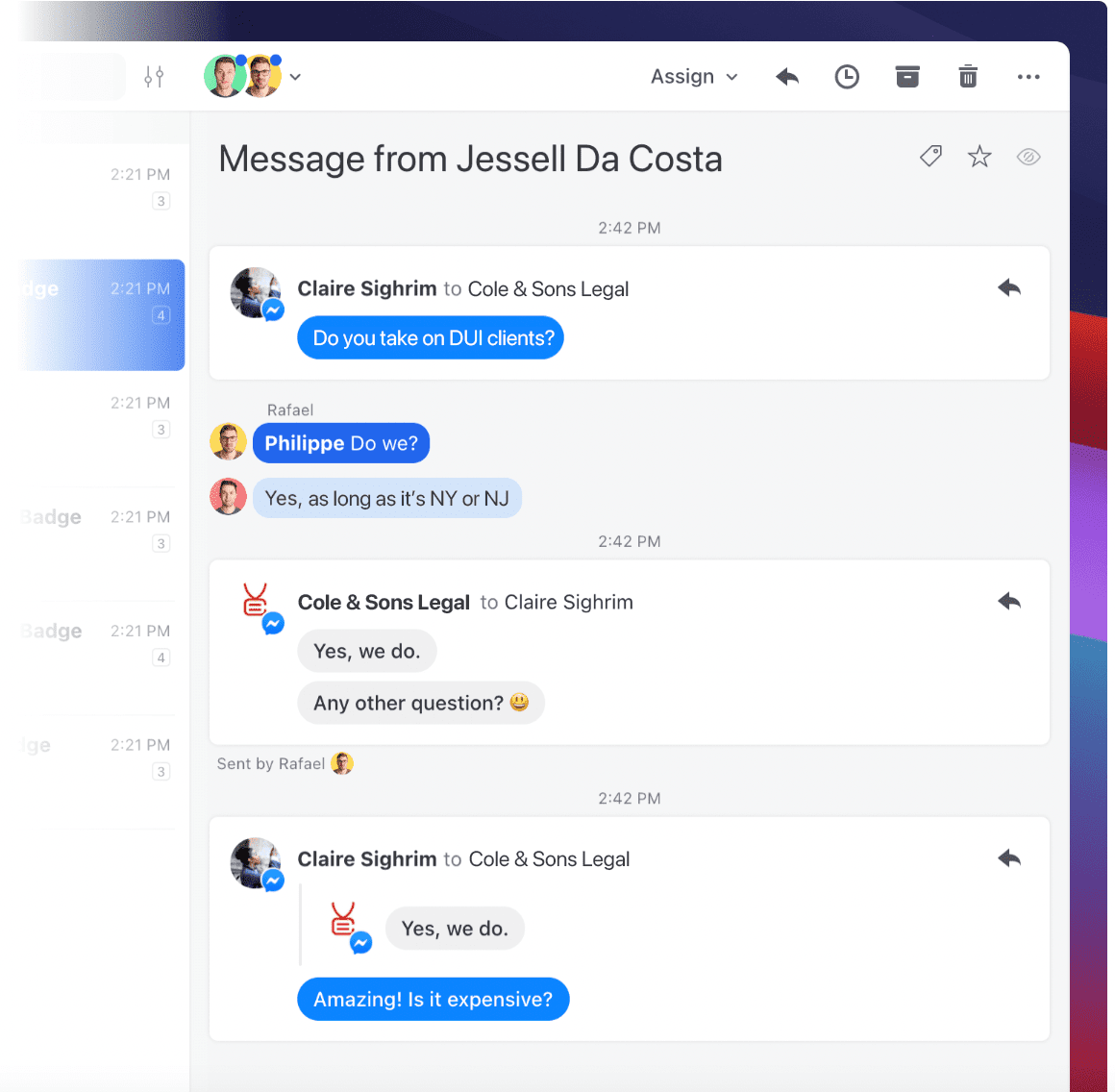
If you are getting law firm leads through social media like Facebook Messenger, route them through Missive instead. Missive offers social media and SMS connections so you’ll get the most important data you need without being on social media or your phone all the time.
10. Use Canned Responses and Email Templates
Many of the emails that lawyers and their staff send throughout the work day provide the same information to different clients. Repeatedly writing out these boilerplate messages is a waste of time.
If you’re using Gmail or Outlook, you may already be using templates to save some time on email follow-ups. But with Missive, you can take canned responses to the next level with searchable shared templates and variables.
Once you’ve created a response in Missive, you can choose to keep it private or share it across the team. All team members instantly get the latest version if you have to update one of the shared templates.
All canned responses are searchable within the app so anyone on your team can find the right response with just a few keystrokes. Here’s an example of how different queries all pull up the same email template in Missive:
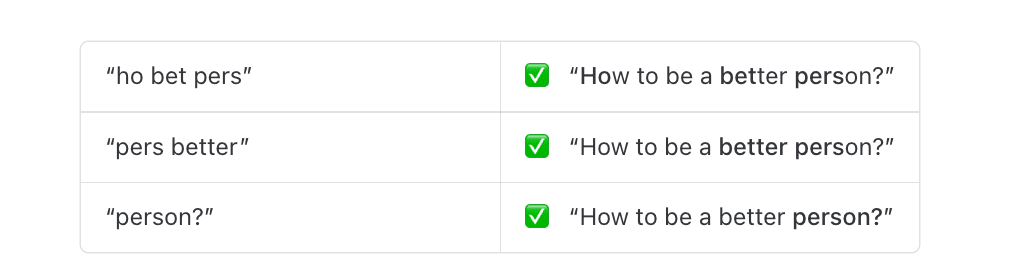
You can even speed up the time it takes to send a canned response by using response variables to insert information like the recipient’s name automatically.
What Lawyers Should Look for in an Email Management Tool
You can’t practice law without communicating clearly and promptly with your clients. That calls for an email management tool with features designed to help you keep organized and save time.
No matter the size of your firm or your practice area, here are some key features to look for in your email management software.
Collaboration

Sending out an email might require some behind-the-scenes conversations. Missive makes it all possible with first-class collaboration features, including live collaboration on drafts.
The beauty I found in Missive is that I have the shared mailboxes, and I can see if someone has responded easily. I can also make comments to my team to give them direction on how to respond, meaning they can handle similar issues like that in the future. I describe Missive as collaborative email.Shawn Stone, Stone Law Group
We use Missive like our central communication platform. We do check-ins and social threads to stay connected as a team. There was not another platform that allowed us to have that social dynamic. This is our team collaboration tool that also allows us to email.Kristen Corpion, CORPLaw
Delegation
As a lawyer, you’ll always end up with more email messages that you can or want to reply to. Seek out a tool where you can assign a message to someone else with just a few clicks.
As Ryan Hamilton points out, attorneys have too many emails. “We need to build out a foundation now so that it’s streamlined from the beginning. The size of our law firm now won’t be the size in two or three years. Our staff utilizing the team folders and the legal assistants filter out everything from thousands of emails to the ten the lawyer needs to see that day make our attorney’s lives a lot easier.”
Ease of Use
What’s the point of getting new software that comes with all the bells and whistles if every person on your team can’t get behind using it? User experience is vital.
The right solution for email management should make it simple for everyone to learn the tool quickly.
The best news about Missive is that it’s loved by law firm staff across the board. Just ask lawyer Derek Martin.
Everybody in our firm picked up Missive quickly. I onboarded four new hires to the platform in a month with nearly no training because of the intuitive UI/UX.Derek Martin, Driver Defense Team
The tool is simple and easy to get used to, and your team will love the improved communication and time savings they’ll experience.
Automation
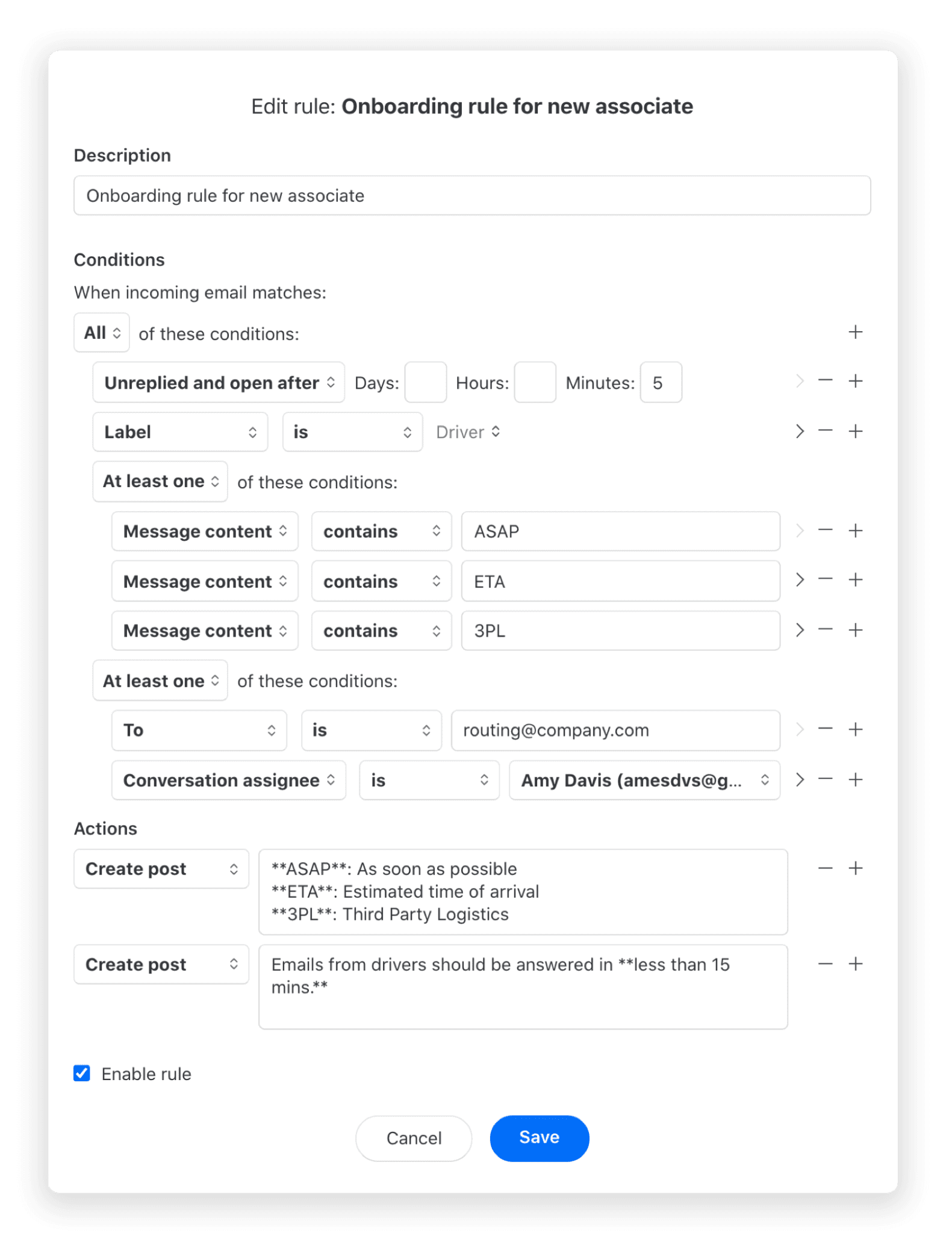
Features like rules and email templates save time by helping keep your inbox organized, ensure that important emails get a fast response, and create consistent messaging from all staff members.
As a lawyer, look for a tool to easily automate your team’s workflow as much as possible. That way, you can focus on what’s important—like getting new cases—instead of worrying about emails falling through the cracks.
Better Email for Modern Law Firms

Let email work in your favor with the right system. Empower your team to take the lead on a message or assign things back to you when necessary. Happily reach inbox zero. It’s all possible with the right system.
If you’re going to invest the time and money into a permanent email app for your law firm, stick with the one that provides the best overall value and experience.
We use so many cloud-based services I’ve lost track. It adds up at the end of each month. Missive is never on the list of what to cut. It’s really changed the way we’re able to help our clients by being synchronized across the board.Ryan Hamilton, Sherwood Family Law
Ready to take Missive for a spin in your law firm? Sign up today and give it a try for yourself.
Frequently Asked Questions
Is email management software secure enough for attorney-client privileged communications?
Yes, as long as you choose a platform that takes security seriously. Look for 256-bit encryption, data hosted in secure facilities, and the ability to control access permissions per team member. Missive encrypts data in transit and at rest, and because shared inboxes replace password-sharing, you actually improve your security posture—nobody needs to log into a shared Gmail account with a sticky-note password.
Can I use Missive with my existing case management software like Clio or MyCase?
Missive integrates with thousands of apps through its API and integrations, including tools commonly used by law firms. Many firms use Missive alongside Clio, MyCase, or PracticePanther—keeping email collaboration in Missive while case files and billing live in their practice management system.
What happens to email history when a staff member leaves the firm?
With a shared inbox, conversation history stays with the organization, not the individual. When someone leaves, their conversations, comments, and context remain accessible to the team. As immigration attorney Arif Gozel experienced firsthand, before switching to a shared inbox his firm would lose all client email history whenever a team member departed. That’s a significant risk—especially when it involves active client matters.
How long does it take to onboard a law firm to a new email management tool?
Most firms are up and running within a few days. As attorney Derek Martin put it, he onboarded four new hires “with nearly no training because of the intuitive UI/UX.” The key is that Missive feels like email—not like a help desk or project management tool—so the learning curve is minimal for people who already know how to use email.

June 3, 2022
Boost Your Team Email Collaboration With These 10 Tips
10 practical strategies for better team email collaboration—from shared inboxes and delegation to templates, automation, and collaborative writing—with tips for moving beyond Gmail's limitations.
Email collaboration is vital for teams in today’s business world. Without it, important tasks can slip through the cracks, and opportunities can be missed.
Most businesses aren’t using email to its full potential, especially among small businesses.
Whether you’re already using a shared inbox software or simply need to find a way to manage team communication more effectively, here are 10 simple ways to boost email collaboration within your team.
Key Takeaways
- Delegate, don’t forward: Forwarding an email keeps you on the hook. Assigning it transfers ownership so the right person handles it directly—no back-and-forth, no confusion about who’s responsible.
- Centralize everything in one place: When your team’s email, chat, and shared inboxes all live in one tool, nobody has to jump between apps to find context or figure out what’s been handled.
- Share templates, contacts, and labels across the team: Shared resources keep everyone consistent and eliminate the busywork of manually syncing information between individual accounts.
- Write emails together, not separately: Collaborative drafting inside your email client beats the copy-paste cycle of writing in Google Docs and then transferring it to email.
- Automate the repetitive stuff: Auto-responses, spam filtering, and rule-based routing free your team to focus on emails that actually need a human touch.
What Is Email Collaboration?
Quickly put, email collaboration is a practice where team members cooperate on emails, generally from a shared inbox, to share the workload.
Most shared inboxes are used for companies’ shared aliases like support@ or info@ to enable teams to work together on emails. This can involve sharing information and updates, discussing ideas and decisions, and providing feedback and support to each other.
Some tools, with features such as commenting, collaborative writing, and sharing options, also make it possible to collaborate on personal emails.
Benefits of Email Collaboration
Having a good system of email collaboration comes with a lot of advantages for your business whether big or small. Some of you might think that your small team doesn’t need it since you only have a few team members, but chances are they are responsible for multiple aspects of the business and will certainly need to collaborate on emails with a coworker at some point.
A good email collaboration tool can help teams to streamline communication and improve the efficiency and effectiveness of their work processes.
By collaborating on emails, teams can work together efficiently even if they are not in the same location. And since all team members have access to the same information and can see each other’s contributions, transparency and accountability are also increased.
Common Drawbacks of Email Collaboration
Collaborating on emails brings a lot of benefits to your team, however, if you’re using a tool like Gmail to manage your personal and team emails at work there are some downsides you should know about.
Gmail isn’t great for team collaboration and can do more harm than good. The main drawbacks are:
- No ownership: It’s hard to assign people to emails and to have clear responsibilities. This can make it easy for emails to fall through the cracks or for team members to duplicate work. It’s also hard to see who in the customer support team for example is working on an email. This can lead to duplicate work.
- No centralized app: If you are using Gmail for work emails, you could start using Google Collaborative Inbox to manage shared emails. However, you would have to constantly switch between the two web applications. That’s without mentioning having to learn a completely new tool with a different UI.
- Less productivity: You can’t view all the emails that are assigned to you. Also, your only option to assign an email to another person is by forwarding it. It translates to more emails cluttering your inbox.
- No private discussion: While there are ways to add notes to Gmail, you can’t send private messages to colleagues to exchange around a specific email internally. You’ll be required to use email threads which can lead to other problems when misused.
Using software made for email collaboration like Missive can solve these problems and make sure that your company benefits from all the advantages of collaborating on emails.
Explore Missive
💾 Download Missive for free👀 Book a demo
✍️ Explore our customers' stories
💲 View pricing
10 Email Collaboration Strategies for Better Team Work
1. Establish a Process & Accountability
Having a process in place is key when it comes to email collaboration. Every team member should understand their role and managers need systems to maintain accountability.
That means that you should always be clear about who needs to do what by when.
For example, if you need someone to review a document, include specific instructions on what you’d like them to do and make it clear that they’re responsible for completing the task. Deadlines should also be included whenever possible.
In Gmail, you could establish a streamlined process through the support of external documentation and SOPs so that your team knows exactly how to collaborate on email.
You could also make use of Google’s "Tasks" app to keep track of deadlines and individual responsibilities. The problem with adding comments and notes to Gmail this way is that it’s still based on the individual and doesn’t lend itself well to collaborative work.
That’s where email clients like Missive, a tool built with collaboration features as a first principle, can be a game changer.
In Missive, you can do this by assigning emails or tasks to teams or individuals with a few mouse clicks (or keyboard shortcuts like ⇧ ⌘ K ), eliminating the need to CC or BCC anyone.
The email will automatically be added to the assignee’s inbox.

If you need functionality for due dates or additional data to be tracked, you can send tasks directly from Missive to popular project management apps like Asana, Trello, Todoist, and ClickUp.

2. Don’t Share Email Accounts the Old Way
When you share an email account, it’s difficult to keep track of who’s responsible for what. Important messages easily get lost in the shuffle.
Instead, each team member should have their own email account that they can access. That way, everyone has a clear record of who’s responsible for what and who completed it.
But that doesn’t mean that you can’t still share information–you just need to do it more smartly. A collaborative email tool like Missive makes it easy to share emails and other information without actually sharing email accounts.
With Missive, you can add other team members to a shared team inbox so everyone can easily view and respond to messages together while simultaneously maintaining the integrity of their email accounts.

You can even chat with each other right from the app so that you can quickly discuss important details and cut down on the back-and-forth context switching in other tools like Slack.

Missive gives you the best of both worlds: everyone’s inbox remains segregated, yet still shareable for collaboration and accountability purposes.
3. Delegate, Don’t Forward
When you need to pass along an email to another team member, it’s tempting to just hit the forward button. However, that’s not always the best course of action for email management.
Think about it: you’re still on the hook when you forward an email thread.
If there’s a problem with the task or questions to be answered for a customer, the email will have to go through you instead of the customer support team member who’s responsible for the task, so you’re still the support POC for that task.
Instead of forwarding an email, delegate it.
Replying to someone with your delegate CC’ed is one way of doing things, but the problem is it’s common for your delegate to still have questions and need clarification. And when they do, an unruly chain of back-and-forth emails ensues.
Delegating through Gmail can be challenging because the only way to do it is through shared Google Workspace accounts or Google Groups.
Google’s collaborative inbox provides a central place for your team to communicate, and share documents, calendar events, and more.
But it still doesn’t solve the problem of having to forward emails back and forth whenever you need to discuss the context of an email with a coworker in the email itself.
Using chat is an option, but still requires you to add a bunch of contexts.

Delegation in Missive

When you delegate things in Missive, you can use comments and chat to include specific instructions on what needs to be done—reducing the back and forth and confusion and improving workflow efficiency.
4. Use the SCQA Framework to Communicate Clearly

Clear communication can dramatically boost team collaboration.
Here’s a useful model to apply when you need to convey an idea, respond to a question, delegate a task, or provide details around a situation in written communication.
Lead with the point of your communication (called the BLUF principle), followed by the details structured using the SCQA framework coined by McKinsey consultant Barbara Minto.
SCQA stands for Situation, Complication, Question, and Answer.
Here’s how it all works together:
- Lead with your point.
- Situation: Start by succinctly describing the situation. You’re setting the stage here and facilitating alignment. Without stating the situation and establishing alignment, everything else you try to communicate about will fall apart.
- Complication: Next, explain the complication. In other words, what’s the pain point, motivation, or reason for action? Keep things fact-based.
- Question: Now it’s time to ask your question. Be as specific as possible. It should flow logically from the situation/complication. If you framed your situation/complication correctly, the question should almost sound rhetorical.
- Answer: The answer should also be structured so that it relates to the situation/complication and directly addresses the question. It is the summary of your main idea or thought that you want to be conveyed.
A collection of excellent examples of this style of writing in different contexts can be found in this article over good business writing by Leonardo Fed.
When you use this framework across your communication channels, you can be sure that your emails are clear and concise. Plus, you’ll avoid misunderstandings and save everyone’s time.
5. Centralize Your Email
Centralization means having one place where all your team’s email communication is stored—a central hub where your whole team can see all the emails sent and received by the team. Think of it as a group email but with separate emails for each person.
There are a few different ways you can do this.
One option is to use an email client like Microsoft Outlook or Gmail. Another option is to use a project management tool like Asana or Trello. But, each of these requires sacrifice in terms of collaboration or context-switching to make them work.
The easiest way to centralize email amongst a team is to use a collaborative email client like Missive.
With Missive, each user has a mailbox for their account but the admin can also set up a shared mailbox (such as a team account) that all users can access and respond from. That way, everyone can see the same emails and there’s no need to forward messages or CC everyone.
You can also manage communication from channels other than emails like WhatsApp, SMS (via Twilio), and social media channels like Instagram and Facebook Messenger.

The benefit of using a centralized system is that it makes it easier for the entire team to stay up-to-date on the latest email conversations in their mailboxes in a single place.
Plus, it’s easier to search for old emails when you need to reference them. And the best part is that emails can be broken down into smaller tasks or projects, making it easier to stay organized and encouraging teamwork.
6. Use Shared Email Templates
When you’re sending emails to clients or customers, it’s important to be consistent. That means using the same language, tone, and format for all your communications.
One way to ensure consistency is to use shared email templates. These are email templates that can be accessed and used by anyone on your team.
Not only do shared email templates save you time, but they also help to ensure that your team is always on the same page. Plus, they can be customized to fit your brand’s voice and style.
If you’re using Gmail, for example, you’d have one of your team members develop a template following email etiquette for customer service. Then, you’d copy them to a shared repository (be that Google Docs, Notion, Guru, or similar.). Your team members can then add that template to their canned responses.
Great–but what happens when the template changes in the repository? Unfortunately, you’d have to inform your team members to update the template in their canned responses.
A better solution is to use a tool like Missive, which, when any user generates a template, stores that template in the repository and makes it available to everyone on the team. Plus, when someone updates a template, that change is pushed to everyone’s account automatically. That eliminates the need for manual updates!
7. Share a Book of Contacts
If your team is constantly sending emails to the same people, it makes sense to create a shared book of contacts. This way, everyone will have access to the same contact information and you won’t have to waste time searching for an email address every time you need it.
A shared book of contacts can be stored in a central location, like your email client, a CRM, or in a Google Sheet/Excel document stored in Google Drive or Dropbox that your team has access to.
However, adding contacts to a sheet and manually updating is laborious and a possible point of failure for many teams.
Missive has a built-in shared contact book that supports syncing with Office 365 and Google accounts. They also have options to sync data with other contact tools using no-code tools like Zapier and Make or by building your own custom integration with the Missive API.

When you add or update a contact in Missive, that change is immediately reflected for everyone on your team.
8. Use Shared Filters and Labels
If you’re using Gmail, you can take advantage of filters and labels to segment and organize emails to find later.
For example, you could create a label called "Webinar Launch", which has a filter that includes all the emails sent and received by people on your marketing team that include specific keywords related to your campaign.
But the problem is that labels aren’t shared across workspace accounts and must be set up manually.
This is made easier in Missive where you can share labels and filters with your team.

Shared filters and labels make sorting and organizing emails a breeze and ensure that everyone is on the same page. They also save you time that could’ve been spent setting up labels and filters manually.
9. Leverage Automation
There’s no reason to waste time on tasks that can be automated.
You can set up auto-responses, snooze emails, and even create rules to automate email filing.
For example, in Missive, you can create a contact group in which you add spammers and use automation to automatically trash them the moment they hit your email inbox. Goodbye everyone out there with high-quality backlinks to sell.

Imagine using built-in shortcuts to quickly insert a template or emoji into your email without having to leave your inbox. Or, setting up auto-responses so you can reply to common questions without having to type out the same message over and over again. Better yet, how about snoozing an email until a later time or date so you can focus on what’s most important right now?

Automation can save you a lot of time and headaches, so it’s worth considering if you’re looking for ways to improve your team’s email collaboration and internal communication without putting in a lot of extra work.
10. Write Collaboratively
Finally, one of the best ways to boost email collaboration for teams is to write collaboratively. Instead of sending individual emails back and forth, you can use a tool like Google Docs or Dropbox Paper to write and edit your emails together in real time.
Writing collaboratively has several benefits.
- It saves time sending emails back and forth and trying to teach everyone that even Word Docs can be worked on in the cloud.
- It also helps ensure that everyone is on the same page and that the final email is consistent with your team’s style and voice while simultaneously giving new hires a useful way to learn how someone more experienced with the SCQA framework crafts an email.
However, doing the writing anywhere else other than your email client can introduce needless work for you and your team. You have to write, copy, paste, and then send, right?
With tools like Missive, you can write your emails collaboratively right from your inbox. That means you can avoid the extra steps and still take advantage of all the benefits of collaborative writing. Just write and send using Missive’s Live Edit feature!
Ready to Take Your Team’s Email Collaboration to the Next Level?
Collaboration doesn’t have to be a pain. By following these simple tips, you can boost email collaboration for your team and make everyone’s life a little easier.
Whether you’re using email clients like Gmail or collaboration software like Missive, you can find ways to eliminate wasteful manual labor and stay focused on what matters.
Start a free trial and give Missive a try. Your team will thank you for it.
Frequently Asked Questions
How do you get a team to actually adopt a new email collaboration tool?
Start with the people who feel the pain most—usually whoever’s managing the shared inbox or forwarding the most emails. Let them set it up and see the difference first, then expand. Trying to migrate everyone at once usually creates resistance, especially from people who have their own Outlook or Gmail workflows they’re comfortable with. A phased rollout where early adopters can show the rest of the team what’s working tends to go much smoother.
Do you need email collaboration software if your team is only 3–5 people?
Yes—small teams often benefit the most because each person wears multiple hats. When someone’s handling sales, support, and operations emails, it’s easy for things to slip through the cracks. A shared inbox with assignment and commenting keeps a small team coordinated without the overhead of a full help desk. The question isn’t team size—it’s whether your team shares any email workload at all.
Can you use an email collaboration tool with both Gmail and Outlook accounts?
Most collaborative email tools support both Gmail and Outlook (Office 365 or IMAP), so you can connect accounts from different providers into the same workspace. This is especially useful for teams where some people use Google Workspace and others use Microsoft 365. In Missive, for example, you can add personal accounts from either provider alongside your shared team inboxes—everything appears in one interface.
What’s the difference between a shared inbox and just sharing an email password?
Sharing a password means everyone logs into the same account with no visibility into who’s doing what—emails get read by multiple people, replies get duplicated, and there’s no audit trail. A proper shared inbox gives each person their own login while routing shared email (like support@ or info@) to everyone’s view. You can see who’s assigned to what, leave internal comments, and avoid stepping on each other’s toes. It’s the difference between a shared Google Doc and five people emailing the same Word file back and forth.

June 3, 2022
Email Collaboration: The Complete Guide for Modern Teams
Learn what email collaboration really means, why standard email fails for teams, and 10 practical strategies to improve how your team works together on email.
If your team manages a shared inbox by forwarding emails back and forth, CC'ing half the company, or sharing login credentials for a group account, you already know the problem. Duplicate replies embarrass you in front of customers. Critical messages get buried in someone's personal inbox. And nobody can answer the simplest question: "Who's handling this?"
Email isn't going away. But the way most teams use it was never designed for collaboration. The good news: it doesn't have to stay broken.
This guide covers what email collaboration actually means, why standard email fails for teams, which teams benefit most, and practical strategies you can implement without overhauling your entire workflow.
Key Takeaways
- Shared Inboxes: Centralize team communication to eliminate silos and duplicate replies.
- Internal Comments: Discuss emails behind the scenes without messy CCs or forwards.
- Collaborative Drafting: Write and edit email responses in real-time with teammates.
- Task Assignments: Clearly define ownership by assigning specific threads to team members.
- Workflow Automation: Use rules to categorize and route emails automatically for faster response times.
What Is Email Collaboration?

Email collaboration is the ability for multiple people to work together on email—adding comments, editing drafts, assigning ownership, and approving messages before they're sent. Instead of each person working in an isolated inbox, team members share visibility into the same conversations and can coordinate without leaving their email client.
The best way to do this is with purpose-built software. You could share access to an email account, but this comes with significant security risks and zero visibility into who's doing what.
What Is Email Collaboration Software?
Email collaboration software is a type of inbox tool that multiple people can access simultaneously to manage email and tasks as a team. It replaces the old approach of sharing login credentials for a group address like info@company.com with a platform where each person has their own account, clear assignments, and internal discussion tools.

Cost-conscious companies often create shared mailboxes in Google Workspace or Microsoft Office to make it easier for customers to reach them. It makes sense on the surface—but email was designed for individuals. Sharing credentials to collaboratively triage incoming messages goes against how email fundamentally works, creating confusion at best and angry customers at worst.
Collaborative email software solves this by giving teams a way to work across multiple communication channels from a single place while maintaining accountability through task assignments, delegation, internal chat, rules, and other productivity features.

And when more detail and planning is required, most collaborative email tools integrate with project management platforms like Asana, Trello, and ClickUp.
Why Standard Email Fails for Teams
Understanding why regular email breaks down in a team context helps explain why collaboration tools exist in the first place. Here's where the standard approach falls apart:
| Feature | Traditional Email | Collaborative Email |
|---|---|---|
| Visibility | Fragmented (CCs/Forwards) | Centralized (Shared Threads) |
| Internal Discussion | Separate threads or chat apps | Side-chat comments within the thread |
| Drafting | Solo drafting | Real-time co-authoring |
| Ownership | Unclear (\"I thought you were handling it\") | Assigned to a specific person |
| Security | Shared passwords for group accounts | Individual logins with role-based access |
| Onboarding/Offboarding | Change shared passwords | Add or remove team member accounts |
When you try to use standard email for team work, you end up with duplicate replies, buried context, no accountability, and a constant question: "Did someone already respond to this?" The bigger the team, the worse these problems get.
Benefits of Email Collaboration
Improving how your team handles email isn't just about convenience—it has measurable impact on your business:
- Faster response times: When emails land in a shared inbox with clear assignments, customers get answers faster. No more waiting for someone to forward a message to the right person.
- Fewer duplicate replies: Everyone can see who's working on what in real time, eliminating the embarrassment of two people responding to the same customer.
- Better knowledge sharing: Internal comments and shared conversation history mean institutional knowledge doesn't live in one person's inbox. When someone is out sick or leaves the company, context stays with the team.
- Improved customer satisfaction: Coordinated responses feel seamless to customers. They don't see the internal handoff—they just get a fast, informed reply.
- Stronger accountability: Assigned conversations create clear ownership. Managers can see what's open, what's overdue, and who needs help.
- Reduced tool sprawl: Instead of bouncing between email, Slack, and a spreadsheet to track who's doing what, everything lives in one place.
Teams That Benefit Most from Email Collaboration
The impact of collaborative email scales with team size and communication volume. Here are the teams that see the biggest returns.
Sales
Both outbound and inbound sales teams use team inboxes to keep up with prospects and in-progress opportunities. Inbound teams can assign sales requests to a central inbox (like sales@company.com) using rules like round-robin to reduce the time a buyer waits for a follow-up—since the longer they wait, the more likely they are to contact a competitor.

A lot of companies—both large and small businesses—don't realize how much revenue they lose during the sales process due to poor communication and handoff gaps.
Consider a common scenario: an inbound lead is ready to sign up, but their sales rep goes on vacation without setting up a handoff or auto-responder—leaving a potential customer in limbo.

In Missive, you can set your schedule to Out of Office—or set it for a coworker if they forget. You can also create automation rules to route incoming emails to the entire team or send a webhook to your CRM so active opportunities don't go cold.

For outbound sales, when a rep finally gets a positive reply from a prospect, they can loop in an account executive on the conversation to give them full context before a sales call. Teams can also create and leverage shared email templates so messaging that works for one rep is available to everyone.
Customer Support
Customer support teams often see the most benefit from collaborative email. With tools like Missive, support teams can receive and respond to inquiries from email, live chat, SMS, and social media—all from one place thanks to Twilio and social integrations.

When you manage support inquiries from a traditional shared inbox, it's easy for customer issues to slip through the cracks. Messages go unresponded. Two agents reply to the same ticket. A VIP customer waits days for a follow-up.
This directly impacts revenue. How you treat customers and the value you provide will dramatically impact retention when economic shifts hit and budgets get scrutinized. Failing to address churn by giving support teams the right tools while pouring money into sales isn't a sustainable growth strategy. Support teams need all the help they can get to solve customer problems efficiently and reduce churn.
Customer Success
Customer success teams can work with sales during the handoff phase to give new customers a world-class onboarding experience—keeping everyone aligned on customer expectations, special needs, and the small details that make it feel like you're rolling out the red carpet. Something not always easy with popular help desk tools.

Customer success teams can also coordinate with other departments to understand issues a customer might be having—especially when that customer is pinging support trying to figure out how to cancel. Having insight into these conversations without the mess of CC/BCCs and endless email threads can make the difference between retaining a customer and losing them.
Finance
Accounts receivable and accounts payable teams can tackle outstanding payments and vendor invoices more efficiently, especially when an approval process or back-and-forth communication is required. Collaborative email keeps the full context visible to everyone involved without forwarding chains.
Executives
Executives of all business sizes benefit from collaborative email when working with an executive assistant or chief of staff. Being able to delegate incoming and outgoing emails via an alias ensures things flow smoothly from the top down.

A good EA can manage your inbox collaboratively without needing your login credentials—maintaining full visibility into what's been addressed and what hasn't. Whether that's responding to an important customer or helping you achieve inbox zero, the delegation happens seamlessly. This is especially important for smaller businesses leveraging a remote VA who aren't ready to hand over login credentials.
10 Strategies to Improve Email Collaboration
Understanding the benefits is one thing—putting them into practice is another. Here are ten actionable strategies to improve how your team collaborates on email.
1. Centralize Your Email
The first step is getting everyone out of their individual silos and into a shared view. Set up a shared inbox for your team's customer-facing addresses so every team member can see incoming messages, who's working on what, and what's been resolved. This single change eliminates the "I didn't see that email" problem.
2. Assign Conversations, Don't Just Forward
Forwarding an email to a colleague creates a copy—not a handoff. The original thread stays in your inbox, the context gets fragmented, and nobody knows who's actually responsible. Instead, assign conversations directly to the right person. In Missive, assigning an email transfers ownership clearly: the assignee sees it in their inbox, and the rest of the team can see it's been claimed.
3. Stop Sharing Passwords
If your team accesses a shared inbox by logging into the same account, you have a security and accountability problem. There's no way to know who read what, who replied, or who accidentally deleted something. Collaborative email software gives each team member their own account with role-based access to shared inboxes—no password sharing required.
4. Use Internal Comments Instead of CCs
Need to ask a colleague a question about an email before responding? Don't CC them on a reply or start a separate Slack thread that loses context. Use internal comments that live inside the email conversation itself. Your team sees the discussion; the customer never does. This keeps context attached to the conversation where it belongs.
5. Write Responses Collaboratively
For sensitive or complex emails—like a response to an upset customer or a high-stakes proposal—multiple people may need to weigh in before the message goes out. Collaborative drafting lets teammates edit the same reply in real time, like Google Docs for email. No more copying draft text into Slack for feedback.
6. Use Shared Templates for Consistency
When multiple team members handle similar inquiries, shared canned responses ensure every customer gets an accurate, on-brand reply. Templates save time and maintain consistency—especially important for support teams handling high volumes of recurring questions.
7. Organize With Shared Labels and Filters
Shared labels let your team categorize conversations consistently—by client, project, urgency, or status. Combined with filters that automatically apply labels based on sender, subject, or keywords, this creates an organized system that everyone follows without extra effort.
8. Automate Routing and Triage
Rules can automatically assign incoming emails based on criteria like sender domain, subject line keywords, or round-robin distribution. This means emails reach the right person without manual sorting, reducing response time and preventing messages from sitting in a queue unowned. You can find practical templates in Missive's rules and templates feature.
9. Track Tasks and Deadlines
Some emails require more than a reply—they require follow-up tasks, deadlines, or multi-step workflows. Turn those emails into tasks directly within your email tool, or integrate with project management apps to ensure nothing falls through the cracks. The goal is bridging the gap between "I read it" and "I did something about it."
10. Extend Beyond Email
Modern team collaboration isn't limited to email. Customers reach out via SMS, WhatsApp, live chat, and social media. Collaborative email tools like Missive let you manage all these channels from one inbox—so your team doesn't need to switch between platforms to stay responsive.
Common Mistakes to Avoid
Improving email collaboration is straightforward, but there are pitfalls that can undermine your efforts:
- Keeping shared passwords "just in case." If you've moved to collaborative email software, fully retire the old shared credentials. Keeping them active creates a shadow workflow that defeats the purpose of the new system.
- Over-automating before you have a process. Rules and automation are powerful, but only if they reflect a clear workflow. Automate after you've manually done the process enough times to know what works—not before.
- Treating collaboration tools like a help desk. Collaborative email is not a ticketing system. If you try to force it into a ticket-queue mentality, you'll lose the conversational, human feel that makes it effective for customer-facing communication.
- Ignoring the "last mile" of handoffs. Assigning a conversation is only half the job. Make sure the person receiving it has enough context—internal comments, previous conversation history, customer notes—to take action without asking "what's the story here?"
- Not reviewing automation rules regularly. An outdated rule can silently misroute emails for weeks. Review your automation quarterly and after any major workflow change.
How to Get Your Team to Adopt Better Practices
The biggest risk to better email collaboration isn't the technology—it's adoption. Here's how to get buy-in:
- Start with a small pilot. Don't roll out a new system to the entire company on day one. Start with one team—ideally the one feeling the most pain—and let them prove it works.
- Show, don't mandate. When people see their colleagues responding faster, dropping fewer balls, and spending less time in email, they'll want in. Results sell better than memos.
- Reduce friction. Choose a tool that feels familiar. If the interface looks like email (because it is email), the learning curve drops dramatically. Missive is designed to feel like a natural upgrade, not a foreign platform.
- Document the workflow. Write down how conversations should be triaged, what templates exist, and when to escalate. A simple playbook removes ambiguity and makes onboarding new team members fast.
- Measure the difference. Track response times, duplicate reply rates, and customer satisfaction scores before and after. Concrete metrics make it easy to justify the change to leadership and to keep the team motivated.
Frequently Asked Questions
What is email collaboration?
Email collaboration allows multiple team members to work together on emails through comments, draft editing, and approvals before sending. The most effective approach uses specialized software rather than sharing account credentials, which creates security risks.
Why does sharing email credentials fail for team collaboration?
Email was designed for individual use, not shared access. When teams share login credentials to manage a common inbox like info@company.com, they lose visibility into who's handling what messages, leading to duplicate responses or missed customer inquiries.
How does collaborative email differ from traditional shared mailboxes?
Traditional shared mailboxes in Gmail or Office 365 require everyone to use the same login credentials and provide no visibility into task ownership. Collaborative email software gives each team member their own account with role-based permissions, assignment features, and internal commenting—without exposing the shared email to customers.
Can email collaboration tools replace Slack for team communication?
Email collaboration tools centralize both internal team discussions and external customer communications in one platform. While Slack handles internal chat well, collaborative email software like Missive manages customer-facing conversations across email, SMS, live chat, and social media alongside team coordination.
How does email collaboration reduce customer churn?
Collaborative email prevents customer issues from slipping through cracks when support team members are unavailable. Teams can set out-of-office rules that automatically route messages to active colleagues, assign VIP customers to specific team members, and coordinate responses across departments before customers escalate to cancellation.

May 18, 2022
ClickUp Email vs. Missive
A detailed comparison of ClickUp Email vs. Missive—from inbox organization and templates to automation, multi-channel support, and pricing—so you can decide which tool fits your team.
Since the 90s, “business communication” and “email” have been nearly synonymous. Email is where communication happens, whether it’s emailing a client request, ticketing for IT support, or onboarding a new employee.
Yet, if we’re being honest, most of us still think our email inbox is where productivity goes to die. There has to be a better way, doesn’t there?
Enter: Missive and ClickUp’s Email ClickApp.
These platforms allow you to take your inbox from a “me” space to a “we” space. And, yes, both of these tools will allow you to explore their email features for the unbeatable price of free.
Yet, if we look under the surface and examine the features and missions of each of these companies, they couldn’t be more different. On the one hand, Missive is a full-featured email client with multi-channel integrations. On the other hand, ClickUp is a work management platform that can send and receive emails, sort of.
So, if we were to compare Missive vs. ClickUp Email, which is better?
As a ClickUp expert and a Missive power user, I want to take you through the day-to-day features that will matter most for your email productivity so you can decide for yourself.
Key Takeaways
- Core Focus: Missive is a dedicated collaborative email client; ClickUp is a project management platform with email features bolted on.
- Collaboration: Missive offers internal chat, collaborative drafting, and round-robin assignment directly within email threads.
- Task Management: ClickUp excels at complex project tracking, while Missive keeps tasks lightweight and conversation-based.
- Multi-Channel: Missive handles SMS, WhatsApp, Instagram, Facebook, and live chat alongside email. ClickUp is limited to email and internal comments.
- Best Together: You don’t have to choose—Missive integrates with ClickUp so you can use each tool for what it does best.
Missive vs. ClickUp Email at a Glance
FeatureMissiveClickUp EmailPrimary UseCollaborative Email & ChatProject & Task ManagementShared InboxNative, deep functionalityNo centralized inboxInternal ChatSide-by-side with emailsTask comments onlyCollaborative DraftingReal-time co-writingNot available for emailEmail Aliases (support@, hello@)Unlimited aliases includedNot supportedMulti-Channel (SMS, WhatsApp, Social)Full supportEmail onlyMobile EmailFull-featured appCannot send email from mobileEmail AnalyticsBuilt-in reportingNot availableAuto-Assignment (Round-Robin)YesNoDynamic Variables in TemplatesManual & automated emailsAutomated emails only
Email Organization & Delegation
Tasks vs. Conversations
It is essential to understand how differently emails are organized in ClickUp Email vs. Missive to start our journey.
Conversations are the core of Missive’s user interface. Scrolling along your left sidebar will feel instantly familiar for anyone who’s used Outlook or Gmail in the past, making the Missive learning curve effortless.

Of course, Missive has more superpowers than your average email client – but we’ll talk about that later.
Meanwhile, Tasks are at the center of ClickUp’s email feature. ClickUp users go directly inside a Task’s Activity panel to compose an email. If your email receives a reply, you’ll see it alongside other updates inside ClickUp Notifications.

However, if no one replies to your ClickUp email, you’ll have to search back through all your ClickUp Tasks to find the email you sent. (Speaking from experience here – it’s not a pleasant process.)
Oh! And just as a reminder before we dive deeper: We’re talking today about ClickUp’s email from ClickUp feature, also called the Email ClickApp, where you can send emails to and from ClickUp. This ClickApp is distinct from ClickUp’s one-way email to ClickUp feature, which only turns emails into one-off Tasks.

Creating Categories to Organize Emails
Have you ever been in your inbox and thought, “Oh! I’ve answered this type of request before, haven’t I?”...and then found yourself scrambling through your Sent emails to find that precious example you forgot to save? If so, you know precisely why inbox organization can make or break email productivity.
Missive helps you organize your inbox through Labels, Team Inboxes, and My Inbox.
- Labels are like tags you can apply to any conversation to file them away for safekeeping. For example, when the snazzy folks over at Missive invited me to write this post, I added the Label “Potential Sponsorship/Collab” to the email so we could easily find this conversation later!

- Team Inbox(es) sort all conversations into a virtual “pile” for relevant team members. For example, we have an inbox for Customer Experience (CX) where we’ll automatically put all of our customer requests.
- When an email is manually or automatically placed in this Inbox, the whole Customer Experience team can see the communication and get to work. Every department can see communication relevant to them without anyone forwarding emails back and forth!

- Finally, My Inbox allows you to manage all conversations that you personally need to take action on.

ClickUp’s email feature, in contrast, doesn’t have its own organizational structure. There is no centralized email inbox in ClickUp (although they’re considering it). The Task you send the email from is where your ClickUp-originated email will always live.

ClickUp’s task-based structure makes it impossible to see an overview of all emails.
Merging Emails & Conversations
Last month, we received an email from a client and that client’s assistant regarding the same request: updating a password. Two separate emails hit our inbox within an hour.
If we were emailing in ClickUp, we would have been stuck! In ClickUp, email conversations (and their replies) cannot be moved, merged, labeled, or reorganized. They’re stuck exactly where they were first sent (or received).

In Missive, we could easily select both emails and click “Merge Conversations.” Magically, the two emails became one Conversation that could be tackled by one Customer Support rep comprehensively.

If your inbox gets as messy as ours does, you’ll probably find the ability to Merge Conversations to be one point for Missive!
Separating Tasks from Emails
Emails often include a mix of information and Tasks. Productive teams know the value in breaking this information apart so no action item is forgotten.
In Missive, you can create a Task inside any Conversation (manually or automatically through a Rule) by selecting the Task icon when commenting. Tasks create little checkboxes inside a Conversation that you can easily assign to one or multiple people.

In ClickUp… well, Tasks are their specialty!
To create Tasks from emails in ClickUp, you’d select “Assign” on any message. This creates an Assigned Comment.

ClickUp Assigned Comments also include more formatting and a Remind Me feature. Because they’re integrated directly into your regular Task List, it’s a great way to ensure no Task is left behind!
Templating Your Emails
Creating Templates of Emails
Email templates are invaluable tools for inbox efficiency. Luckily, both ClickUp and Missive include email template features.
In ClickUp, Email Templates are housed within the “magic wand” icon inside any email composition area as long as you’re on ClickUp’s Business Plan or higher.

Once inside, ClickUp greets you with a robust lineup of formatting options including headers, banners, and embedded content.

In Missive, email templates are called Responses. (I suspect this, in part, is because Missive can handle far more than just emails – more on this later!) Managing Missive’s Responses happens inside the Settings menu.

Once open, you can create a new template as effortlessly as writing any standard email, including text formatting and adding images. The whole experience is slick and included on every Missive plan.

The only downside to both of these tools is that neither software allows you to create templated messages written in HTML (yet).
Add Dynamic Variables to Emails
No one likes templated emails that feel like templates. That’s where dynamic variables come in. Dynamic variables allow you to personalize parts of a message based on sender or recipient data.
For example, if we had a dynamic variable for “Recipient’s First Name,” instead of an email saying, “Hi [first name]!” it might say, “Hi Layla!”
If we didn’t know the recipient’s name, we might have a fallback value of “there” so, if we didn’t know a first name, we’d say “Hi there!” to cover all our bases.

In ClickUp, dynamic variables are only available for emails sent via a ClickUp Automation. (You cannot set any dynamic variables in standard ClickUp email templates.)
When triggered, ClickUp Automations will pull data from the Trigger Task and use that to send an email automatically.
To work, every Task sending emails must have data filled in through all relevant Custom Fields of a specific data type. Usually, this requires a lot of data entry, but it’s crucial.

ClickUp’s email variables do not allow for fallback variables, so if any Fields are blank when the automation is triggered…your email might look a little bizarre!

In the example screenshot above, we forgot to fill out the Due Date so our sentence reads “Please complete the example task by .” instead of “Please complete the example task by January 1, 2025.” Oops!
Missive takes a much more flexible approach to dynamic variables. Variables in Missive are available for both automated and manual emails.

When creating a new Custom Variable, creators can decide whether to populate this data automatically or manually. Even though Missive variables cannot yet be formatted (all Missive variables are currently strings), these options provide ample space to explain the meaning behind each variable.

Variables, in my opinion, are one of Missives most underrated features.
Editing & Updating Email Templates
Okay, so we’ve built some stellar email templates. How do we keep them all up-to-date? This is where a solid email template management center can make all the difference.
Editing Responses in Missive is straightforward. When you select Insert Response (or are just browsing Responses), locate the Response’s ellipses menu and select Edit. You can alter anything about the Response in seconds. Your edits are immediately saved, and your template just got that much better!

ClickUp’s email templates, as we’ve alluded to before, are a bit trickier to manage. Email templates are not part of ClickUp’s template center and, instead, can only be found by selecting the “magic wand” icon that appears near any email composition area.

Once inside this manager, you can select the pencil to edit any template. Just don’t forget to click Save!

Consistently Branding Email Signatures
First impressions matter, and that’s true for email, too. Both Missive and ClickUp’s Email ClickApp spoil us with the ability to create on-brand email signatures for all users by utilizing either text or HTML formatting.
In Missive, we can define our signatures per email address or set an Organization-wide Managed Signature for our team.
Like Responses, our Missive signatures can also include dynamic variables, such as automatically pulling in the user’s profile image.

The ability to set signatures for the entire Organization makes it effortless for new team members to start with the right look – making employee onboarding that much easier!
In ClickUp, we can also set up Signatures and insert them either automatically or per email, as long as you’re on the Business plan or higher. Like email templates, ClickUp doesn’t include this feature on Free or Unlimited plans.

Unlike Missive, ClickUp doesn’t allow for a Workspace-wide signature setting. Users must customize signatures for each email address used.

Automating & Delegating Your Email Inbox
Send Emails Automatically
Templating email is nice but automating email sounds better, doesn’t it? Fortunately for us, both Missive and ClickUp’s email ClickApp include email automation!
ClickUp automates emails through Tasks. To automatically send an email, the action must be triggered by behavior that is an eligible ClickUp automation trigger.
The most popular triggers include:
- When Task is Created…
- When Due Date Arrives…
- When Custom Field Changes…
ClickUp automations will send an email once conditions are satisfied only once a trigger event happens – either automatically or manually. For this reason, ClickUp’s email automation tends to work best in structured workflows that are very task-centric and don’t have a lot of variation.

Missive, as a platform dedicated primarily to email-based features, has built considerably more power into their automation options!
Missive emails can be sent automatically by defining Rules (only available on Missive’s Productive plan or higher). When all (or any) of the Rule Conditions are met, the automated actions defined on the rule are triggered.

My favorite triggers are:
- If it’s after 5PM on a weekday…
- If a Conversation has been Closed…
- If a Conversation has been sitting unanswered for 24 hours…
But really, this is just the basics. You can create complex conditions by nesting them in sub-groups, and so far, I haven’t run into any scenario I’ve been unable to build into a Rule.
Oh! And I should mention that Missive also allows you to manually schedule emails to be sent at a later time if you want automation with a personal touch.

Assigning Emails
So far, we’ve talked a lot about the benefits of having a collaborative inbox system. Now for a reality check… if an email is just sitting in a team inbox, everyone is responsible for it, right? Wrong. When everyone is responsible, no one is.
Whether we’re managing emails or bringing utensils to the company holiday party, it’s crucial to clarify who’s in charge of what.
In Missive, Assigning is at the heart of email delegation. You can manually assign emails to coworkers or Teams by selecting name(s) in the drop-down menu.

If you prefer a more automated approach, you can also have Missive automatically assign emails based on capacity by enabling Round-Robin assignment or by customizing those handy Rules we mentioned earlier.
In ClickUp, emails are treated just like any other Task Activity. You can assign an email to an individual by hovering over a received email and selecting the Assign option.

There’s no way to assign emails inside ClickUp automatically. It’s a manual process… so project managers beware!
Alias Email Addresses
Of course, it’s a lot easier to delegate and assign emails if the recipient expects that. If an email was sent to alex@, but we reply to emails from the email address melisa@… that’d be pretty weird for the recipient, wouldn’t it?
That’s why alias email address support should be a deciding factor when selecting your email management software.
Common alias email addresses include:
- support@
- hello@
- info@
- billing@
These “general” emails can redirect emails to one or many recipients at the same domain. It sets the expectation that it’s being shared with a department or team and not necessarily with just one individual. Typically, email aliases can be created for free. They do not require you to set up (and pay for!) another email account with your email provider.
In Missive, you can connect any email alias directly to Missive and even allow others to send or receive emails from that alias.
ClickUp, on the other hand, doesn’t allow you to connect alias email addresses to ClickUp at all. You can only integrate and share access to IMAP, Google, or Outlook email accounts. Plus, you’re limited to only two email accounts per ClickUp Workspace if you’re on a Business plan or higher. At the time of writing, each additional account will add the cost of $2 USD per account per month. Yikes!

Other Productivity-Boosting Features to Watch
Email Tracking & Reporting
Does your email communication improve conversions or increase customer satisfaction? To know, we need to pay attention to our data.
At its core, ClickUp remains a task management system. That’s where they started and that’s still their zone of genius. Reporting on email interaction is not yet possible through any of ClickUp’s reporting-centric Dashboard Widgets.
Missive comes with integrated analytics and comprehensive reporting features.

Communicating Beyond Emails
Although email remains the number one way to communicate in business, it’s hard to ignore how influential channels like Instagram DMs, Facebook Messenger, and WhatsApp can be!
With ClickUp, communication is limited to three formats:
- ClickUp Comments (only for users with access to your ClickUp Workspace)
- ClickUp Forms (allowing users to submit data for one-way communication)
ClickUp does not integrate with any popular communication platforms. This makes sense considering ClickUp isn’t, at its core, designed for external communication – it’s focused primarily on internal communication.
Meanwhile, Missive has built out a robust suite of integrations so you can seamlessly connect with others across:
- Missive Comments (with other Users in your Missive Organization)
- SMS
- Missive Live Chat
If you’d like to meet your audience where they are – whether on Instagram or a Facebook Message – Missive has you covered.
Email on Mobile Apps
If you’re on the go, the last thing anyone wants to do is whip out their entire laptop just to send one email. To effectively manage email, mobile apps are a must.
In ClickUp, there’s no way to send personal emails from ClickUp on the mobile app. Period. You’ll need to have a backup email client on standby to shoot off any quick messages if you’re not on your main device.
Fortunately, Missive can fill the gap. Missive has a slick mobile app for both Android and iOS. While it’s just as fast and orderly as the “main” app, Missive’s mobile version also makes it easier to use thumb-friendly swiping features to save time (and space) on a small screen. Swiping right never felt so productive.

Pricing Comparison
Budget matters, so let’s talk numbers. The pricing structures are quite different because these tools serve different purposes.
ClickUp’s email features require at least the Business plan. Free and Unlimited plan users don’t get access to the Email ClickApp, email templates, or signatures. And if you need more than two email accounts connected, each additional account costs extra.
Missive includes email collaboration on every plan, starting at $14/user/month. Email templates (called Responses) are available on Starter. Advanced features like Rules and automation start on the Productive plan. Every new team gets a 30-day trial with Productive features first.
Plan FeatureMissiveClickUpEmail at entry tierYes ($14/user/mo)Free plan: 1 account, 100 sends. Unlimited plan: 1 accountEmail templates and signaturesEvery planBusiness plan and aboveBranding on outbound emailNone"Sent using ClickUp" unless Business or aboveAlias supportUnlimited, includedNot supportedAdditional email accountsIncluded in plan$2/account/month after first two
The bottom line: if email collaboration is central to your workflow, Missive offers more email value at every price point. If you’re primarily a project management team that occasionally sends emails from tasks, ClickUp’s email features may be sufficient—but they come at a higher entry point.
Which Should You Choose?
After spending years with both tools, here’s the simplest way to think about it:
Choose Missive if:
- Your team’s work revolves around email—responding to customers, managing shared inboxes, coordinating across departments
- You need multi-channel support (SMS, WhatsApp, Instagram, live chat)
- Email delegation, assignment, and accountability are daily concerns
- You want email analytics and reporting
- You need to send email from your phone
Choose ClickUp Email if:
- Your team’s work revolves around task and project management, and email is a secondary need
- You want to send occasional emails directly from task context (e.g., notifying a client that a deliverable is ready)
- You’re already on ClickUp’s Business plan and want to consolidate tools
- Your email volume is low and doesn’t require shared inbox features
And if you’re like me? You use both.
ClickUp Email vs. Missive – Why Not Both?
When you’re comparing Missive vs. ClickUp email, at first, there are plenty of similarities:
- Both have solid core functionality to organize your communication.
- Both let you easily assign emails to collaborators.
- Both allow you to automate email in their own way.
But, when we dig deeper, it’s hard to deny that Missive is the better choice for inbox collaboration. When we consider the mission of each company, it makes perfect sense!
ClickUp’s mission is to build a best-in-class work management tool. ClickUp’s email features? They’re not the top priority. Meanwhile, Missive is determined to create a best-in-class email client, and it shows.
Despite that, it might feel impossible to choose which software you need to add to your tech stack. So… don’t. (I didn’t!)
I’m a ClickUp specialist, but I continue to use both Missive and ClickUp side-by-side for our company. I’m a huge fan of Missive (and writing this article) because Missive is the best software for organizing, collaborating, and managing emails I’ve ever experienced.
At the same time, I’m obsessed with ClickUp because of its strengths outside of email, especially its task management features.
Thanks to Missive’s easy-to-use ClickUp integration and the ability to embed our ClickUp Doc SOPs directly into the Missive sidebar, we continue to use both tools side-by-side.


Missive vs. ClickUp? For my company, it’s Missive AND ClickUp.
What about you?
Frequently Asked Questions
Does ClickUp have a dedicated email inbox?
No. ClickUp’s email feature lives inside Tasks—there’s no centralized inbox view where you can see all your emails in one place. Emails are scattered across whichever Tasks they were sent from or received into.
Can I use Missive with my existing ClickUp workspace?
Yes. Missive integrates with ClickUp, letting you create tasks from emails and embed ClickUp Docs directly in Missive’s sidebar. Many teams use both tools side by side—Missive for email collaboration and ClickUp for project management.
Does ClickUp support sending emails from alias addresses?
No. ClickUp does not support alias email addresses like support@ or hello@. You can only connect IMAP, Google, or Outlook email accounts, and you’re limited to two accounts per Workspace on the Business plan (with additional accounts costing $2/month each).
Can I try both tools before deciding?
Yes. Missive gives every new team a 30-day trial with Productive features and no credit card, so you can test shared inboxes, templates, and team assignment properly. ClickUp’s free plan includes one email account capped at 100 sends, and templates and signatures require the Business plan.

May 18, 2022
The 14 best team collaboration software for small businesses in 2026
The 14 best team collaboration tools for small businesses in 2026, by use case, with current pricing and honest trade-offs for each.
The best team collaboration software for a small business is a short stack, not a long list: one place for email and chat, one for meetings, one for projects, and one for files. For most small teams that means a collaborative email client like Missive or a chat app like Slack, Zoom or Microsoft Teams for calls, Asana or monday.com for projects, and Google Drive for files. Below are the 14 tools I recommend by use case, with current pricing and the trade-offs for each.
As a small business owner myself, I still wear a lot of hats and feel like there are always a million and one things left to do.
Keeping things running smoothly depends on clear communication and collaboration throughout the business. Some tools help, but there are so many that it’s hard to know which to pick without wasting time or money.
Chances are you searched online at one point and saw a list of 40 of the best software you could use. But trying 40 tools to see if they’re right for you is a full-time job in itself.
So I did it for you instead.
I’ve personally used most of the apps I recommend below, plus dozens of their alternatives, and I’ve helped several other small businesses find the right set of tools.
When deciding which tools are right for you, think about which areas of your business consume more time than they should. Are you spending too much time going back and forth with others, finding files, delegating tasks, building contracts, or marketing yourself online? Wherever you need to reclaim your time (or your team’s), that’s where you should invest first.
The best team collaboration software at a glance
Prices below are the lowest paid tier per user per month on annual billing unless noted. Monthly billing usually costs more; spot-check current tiers before buying.
| Best for | Tool | Free plan? | Paid plans from |
|---|---|---|---|
| Team email, internal chat, and client communication | Missive | 30-day free trial | $14/user |
| Internal team chat | Slack | ✓ | $7.25/user |
| Teams already on Microsoft 365 | Microsoft Teams | Free trial | $4/user (Teams Essentials) |
| Video meetings | Zoom | ✓ | $14.16/user |
| Async video and training | Loom | ✓ | $15/user |
| Business phone, SMS, and meetings in one | RingCentral RingEX | 14-day trial | $20/user |
| Project and task management | Asana | ✓ | $10.99/user |
| Flat-rate project management | ProofHub | 14-day trial | $45/month flat |
| Visual project boards | monday.com | ✓ (2 seats) | $9/seat (3-seat minimum) |
| File sharing and docs | Google Drive | ✓ (15 GB) | $7/user (Google Workspace) |
| File sharing outside Google | Dropbox | ✓ (2 GB) | $9.99/month (1 person) |
| Marketing and social design | Canva | ✓ | $144/year (1 person) |
| Contracts and proposals | PandaDoc | ✓ (eSign) | $19/seat |
| Sales call coaching | Gong | ✗ | Contact sales |
How I picked these tools
I judged every tool on the same four things:
- Usefulness: does it remove a real bottleneck, or does it add one more place to check?
- Ease of use: can a new hire figure it out in a day without training?
- Price for a small team: seat minimums, seat bundles, and the cost of the plan you’ll actually need, not just the entry tier.
- How well it connects: whether it works with the rest of your stack, so you aren’t copying information between apps.
Best communication tools for team collaboration
Internal and external communication matter in any business. A study by Fierce found that 86% of employees and executives blame a lack of collaboration or poor communication for workplace failures. With more teams working remotely, being able to stay up to date through asynchronous communication is critical.
These are the most valuable tools we’ve found for it.
1. Missive
Best for: small teams that run the business out of email and want internal chat, delegation, and client channels in one app.
Missive is a collaborative email client and team chat app that small businesses use to manage internal and external communication in one place, without adding customers as guests in a chat tool.
Fewer things to keep up with
Have you ever wished all of your customers would send their questions through a single channel?
Me too.
But we both know that’s never going to happen. With Missive, a customer can send you an email, text message, WhatsApp message, or Facebook or Instagram message, and it lands in the same inbox. You can also add a live chat widget to your website.
That removes the need to switch between apps to read, reply, and delegate to other people in your company or support team. It’s all right there.
Missive handles internal communication too. Every conversation has an internal chat that customers never see, and you can create chat rooms for your whole organization, for each team, or for private 1:1 conversations, much like channels and direct messages in Slack.

Conversations around email using internal chat
One of the most useful features of Missive is the ability to add notes and have conversations around an email with a coworker without forwarding anything.
This is something we do all the time. When a member of our team needs help with a customer, they @mention a coworker and ask. The coworker sees the email in their own inbox, and both can chat right below the email thread without sending back-and-forth emails or pasting links into Slack.
As the head of my company, I’m bombarded with emails all day long. Some can go straight to the trash and some justify a reply immediately. Between those two extremes, there’s a ton I can delegate to others.
Instead of forwarding the email, adding it as a task in Asana, or sharing it in Slack, I tag the person I want to delegate it to and it’s immediately shared with them. I can add details so they can reply as themselves or draft a reply together with me before it goes out.
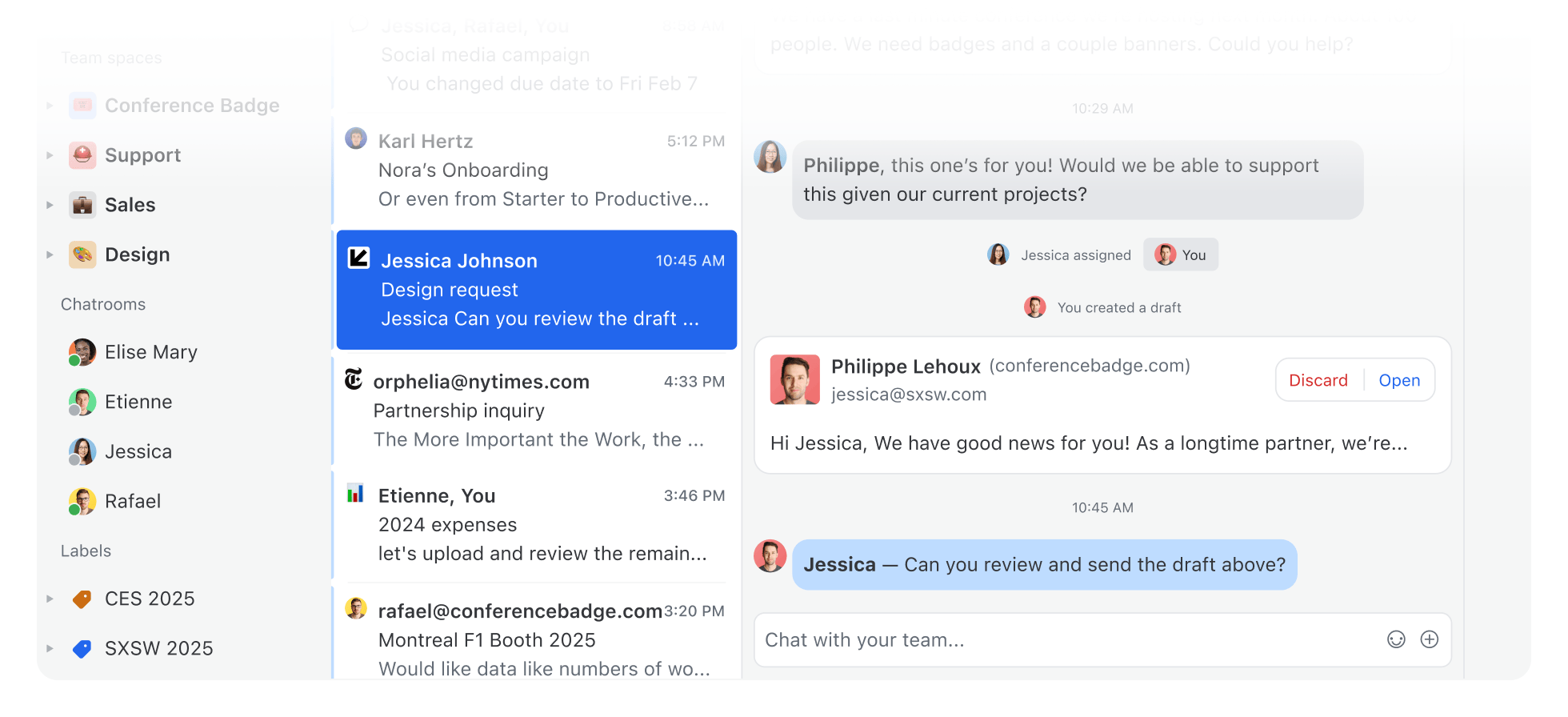
This single feature gives me back several hours per week that I can spend working on the business instead of always in it.
For outside collaborators like an accountant, contractor, or client, Guest Access lets you invite them into specific conversations to chat alongside the email, without paying for another seat.
Price
Missive gives every new team a 30-day free trial, no credit card required. Paid plans are $14 (Starter, up to 5 users), $24 (Productive, up to 50 users), and $36 (Business) per user per month on annual billing, or $18, $30, and $45 billed monthly. See the pricing page for the full comparison.
We’ve been on the Productive plan for a few years now because of the time we save with rules and integrations. Rules, integrations, and the AI assistant start on Productive, so that’s the plan most growing teams should budget for.
Beyond its core features (which work great on mobile, by the way), Missive supports integrations with tools like Trello, Asana, ClickUp, Pipedrive, HubSpot, and Zapier. It acts as our email client, customer support inbox, task system, calendar, and internal communication app, and saves us hours each month.
Trade-off: Missive doesn’t have built-in video calls, so you’ll still want Zoom or Teams for meetings. Live chat runs on your own Twilio account, which is an extra setup step.
2. Slack
Best for: fast internal chat between teammates.
Slack is one of the most common apps businesses of all sizes use to talk in real time or asynchronously. You can message, share files, hop on huddles, and get updates from third-party tools like Google Drive and Gmail.
Slack has channels you can use to separate different types of conversations. For example, you might have a channel only for operations and another only for talking with your CPA.

Price
Slack’s free plan keeps 90 days of message history. Pro is $7.25 per user per month on annual billing ($8.75 monthly), and Business+ is $15 per user per month on annual billing.
If you’re a service business with customers who work with you on long-term projects, you can bring them into shared channels with Slack Connect on paid plans. But if you have a high volume of customers, it’s a logistical nightmare to add them all to Slack, so you’ll still rely on email, live chat, phone, and text. That means more subscriptions and more apps to keep up with so things don’t slip through the cracks.
Trade-off: Slack works best for internal chat. Customer conversations stay in your inbox, which is why many small teams pair Slack with a shared inbox or replace both with a tool that combines email and chat.
3. Microsoft Teams
Best for: businesses already on Microsoft 365 and Outlook.
Microsoft Teams combines chat, video meetings, and file sharing, and it plugs into Outlook, OneDrive, and the rest of Microsoft 365. If your company already pays for Microsoft 365, you may have Teams already.
Price
Teams Essentials is $4 per user per month on annual billing and includes unlimited meetings with up to 300 participants and 10 GB of cloud storage per user. Microsoft 365 Business Basic, which adds business email and 1 TB of storage, is $7 per user per month on annual billing.
Trade-off: Teams is heavier than Slack and feels most at home inside a Microsoft setup. Teams on Google Workspace usually prefer Slack or Google Chat.
4. Zoom
Best for: video meetings with people inside and outside your company.
A few years ago it wouldn’t have been strange to talk to small business owners who hadn’t heard of Zoom. I doubt that’s the case anymore. Zoom hosts video and audio calls, meetings, webinars, and team chat.
Price
The free Basic plan lets you host meetings with up to 100 participants, capped at 40 minutes. You can work around this by having more efficient meetings (something we all need) or scheduling back-to-back meetings. Zoom Workplace Pro removes the limit (up to 30 hours per meeting) and starts at $14.16 per user per month on annual billing, or $15.99 monthly.
Slack supports calls too, but with Zoom you can meet with people who aren’t in your Slack workspace without any setup on their side.
Trade-off: another standalone app to manage, and the free plan’s 40-minute cap gets old fast for client meetings.
5. Loom
Best for: async video, walkthroughs, and training.
Text-based communication is great, but sometimes you need to send a video or screen recording so people don’t misinterpret you. That’s where Loom comes in.
Loom is one of the easiest asynchronous communication tools we’ve tried and outclassed alternatives like Vimeo and Vidyard. Once you finish recording, Loom gives you a link to share so people can watch instead of skimming your email, missing the context, and starting another needless back-and-forth thread.
Price
The free Starter plan includes up to 25 videos per person, 5 minutes each, for up to 50 workspace members. Business removes those limits and costs $15 per user per month on annual billing ($18 monthly).
Trade-off: the 5-minute cap on the free plan is tight for training videos.
6. RingCentral RingEX
Best for: small teams that want business phone, SMS, and video meetings from one provider.
Some small businesses still manage their communication like it’s 2012: one app for calls, another for messaging, another for video meetings, and somehow fax still sneaks into the mix.
RingCentral’s RingEX brings business calling, team messaging, video meetings, SMS, and fax into a single platform, so your team can communicate without constantly switching tabs. It gives you one business number that works on desktop and mobile, which helps a small team come across as more professional.
Price
RingEX starts at $20 per user per month on annual billing (Core) and goes up to $35 per user per month (Ultra). There’s a 14-day free trial.
Unlike chat-only tools like Slack, RingEX was built with voice reliability in mind (RingCentral’s strong suit), and it includes AI features like call summaries and notes. If your team is hybrid or spread across locations, it makes communication a lot less chaotic.
Trade-off: it’s priced like a phone system. If you don’t need business calling, a chat app plus Zoom is cheaper.
Best project management tools for collaboration
I can confidently say I’ve used every popular project management app out there and have yet to find a single one I’d call the best for everyone.
Every company is a little different. What works for a law firm won’t always work for a logistics company, a marketing agency, or a budding Shopify store. You have to figure out which one will work best for your business, your customers, and your team.
I highly recommend reviewing a tool’s public product feedback board before you even sign up for a free trial. You can usually find it by searching for:
- [name of the tool] + feedback
- [name of the tool] + canny board

See which feature requests have been around the longest with a ton of votes, and ask yourself whether you want to invest in a tool that hasn’t delivered what its customers keep asking for.
That being said, here are a few we’ve used and seen other teams succeed with.
7. Asana
Best for: teams that need structured projects, timelines, and recurring workflows.
Asana is one of the most popular task management systems available. It has a free plan, but we quickly realized we needed a paid plan to manage operations and get access to timelines (like a Gantt chart), dashboards, custom fields, rules, and task templates.
Asana doesn’t have native time tracking on its core plans, so if that matters, you’ll need an Asana time tracking integration like Everhour or Asana’s paid timesheets add-on.
A word of advice: if you use Asana, save yourself some frustration and go light on subtasks. Many features don’t play nice with them, and they work best as a personal checklist.
If you prefer a kanban approach, check out Trello. Asana has a board view, but it’s not nearly as flexible.
Price
Asana’s free Personal plan is meant for individuals. Starter is $10.99 per user per month on annual billing ($13.49 monthly), and Advanced is $24.99 per user per month on annual billing.
Trade-off: paid plans require at least two seats and are sold in seat tiers, so a team of six may end up paying for more seats than it uses. Keep that in mind.
8. ProofHub
Best for: growing teams that want project management without per-user pricing.
ProofHub is an all-in-one project management and team collaboration platform that keeps tasks, files, and project discussions in one place. You can create projects, assign tasks with deadlines and custom fields, and keep the conversation attached to the work instead of scattered across a chat app.
One feature worth calling out is the built-in proofing tool. If your team reviews creative assets like designs or ad mockups, reviewers can leave comments directly on the file instead of describing their feedback over email.
Price
ProofHub’s biggest differentiator is flat-rate pricing. Remember the Asana seat tiers above? None of that here: you don’t pay per user at all. The Essential plan is a flat $45 per month on annual billing for unlimited users and up to 40 projects, and Ultimate Control is $89 per month on annual billing with unlimited projects, custom roles, and priority support. There’s a 14-day free trial.
Trade-off: fewer third-party integrations than Asana or monday.com, so check that the tools you rely on are supported.
9. monday.com
Best for: visual project boards that non-technical teams pick up quickly.
You’ve probably seen their ads. We don’t use monday.com ourselves, but we tested it extensively and passed on it at the time because it didn’t support subtasks (it does now).

Price
monday.com has a free plan for up to 2 seats with 3 boards. Paid plans start at $9 per seat per month on annual billing (Basic), with Standard at $12 and Pro at $19. All paid plans have a 3-seat minimum.
Trade-off: timeline views, guest access, and meaningful automations start on Standard, so most teams outgrow Basic quickly.
Best file and document tools for collaboration
You’re probably already using one of these document collaboration suites:
But you still need a place to share files that don’t live in one of those editors. That’s where a file storage tool comes in.
10. Google Drive
Best for: teams already using Gmail and Google Docs.
Google has one of the best cloud storage options out there, especially for file sharing. You can store documents, pictures, videos, and just about any file type and access them from any device. If you need files offline, Google Drive supports that through its desktop and mobile apps.

Price
A free Google account includes 15 GB of storage shared across Drive, Gmail, and Photos. For business use, Google Workspace Business Starter is $7 per user per month with a one-year commitment ($8.40 on the flexible plan) and includes 30 GB of pooled storage per user plus business email. Business Standard is $14 per user per month with 2 TB per user.
I personally prefer Google Drive over all other options, but that’s because of the Google apps (Docs and Sheets) we use so much day to day.
Trade-off: Business Starter’s 30 GB per user fills up quickly if you store video or design files.
11. Dropbox
Best for: teams that aren’t tied to Google or Microsoft and work with large files.
If you’re not heavily invested in Google’s apps, check out Dropbox. It does the same core job as Google Drive, with strong file sync and large file transfers.
Price
Dropbox Basic is free with 2 GB of storage. Plus is $9.99 per month for one person with 2 TB, and Standard for teams is $15 per user per month on annual billing, starting at 3 TB for the team.
Trade-off: the free plan is much smaller than Google’s, and it gets more expensive than Google Drive as your storage needs scale.
Best marketing and social media tools for collaboration
Marketing is critical to growing your business. People can’t buy from you if they don’t know you exist. For most small businesses, social media is one of the best channels to generate demand, and it’s also the one that benefits most from back-and-forth collaboration.
12. Canva
Best for: creating social posts, flyers, and presentations without a designer.
Canva is one of those tools a company of any size can get a ton of value from. Hiring a graphic designer can be expensive, but with a few YouTube tutorials and 15 minutes, any small business can create professional-looking designs to promote on social media and attract more customers.

Price
Canva Free includes a large library of templates and lets you share designs for feedback. Canva Pro is $144 per year for one person and adds premium templates, AI tools, brand kits, and social scheduling. For teams, Canva Business is $250 per person per year (or $20 per person per month) and adds shared team workspaces, brand controls, and approvals.
The most common reason I’ve seen people upgrade is to schedule posts to social media directly from Canva without paying for another tool like Hootsuite or Sprout Social.
Trade-off: Canva Pro is for one person only, so a team of two or more needs Canva Business.
Best sales and contract tools for collaboration
Most small businesses have fewer than 20 employees, so you might be able to skip this section. If you’re a founder filling the roles of CEO, head of marketing, head of sales, and head of everything else, you don’t need tools to help you collaborate with yourself.
But if you have more than one salesperson, or your salesperson struggles to hand off deals to the people who handle operations, these tools can help.
13. PandaDoc
Best for: proposals, quotes, and contracts that need internal approval and e-signatures.
PandaDoc is useful when you need team collaboration on customizable contracts and sales documents with customers who don’t want to send physical files back and forth like it’s the 20th century.

Real-time editing and approvals
Two people sometimes work on a contract at the same time, especially for a complex agreement with a long-term customer. Once a contract is drafted, I review and approve it before it goes to the customer for legally binding e-signatures.
If the customer requests revisions, they can do it in PandaDoc and chat with us there. That’s far more efficient than redlining a Word document and emailing it back and forth.

Price
PandaDoc’s free eSign plan lets you send 5 documents per month. Starter is $19 per seat per month on annual billing ($35 monthly), and Business, which adds custom quotes, pricing tables, and CRM integrations, is $49 per seat per month on annual billing ($65 monthly).
Trade-off: the CRM and quoting features most sales teams want start on Business.
14. Gong
Best for: sales-heavy companies with several reps running a lot of calls.
Unless your sales process involves more than one rep per opportunity, I can’t think of many CRMs where the collaboration features are worth paying extra for.
The one truly collaborative tool we use in the sales process is Gong. It’s probably the single most impactful piece of technology we’ve invested in to boost revenue. Gong records and transcribes sales calls and uses AI to surface what’s working and what isn’t, so sales leaders can coach reps and improve close rates.
Price
Gong doesn’t publish pricing. It depends on the number of users and the license type, so you’ll need to contact their sales team.
Trade-off: Gong is built for teams with real call volume. A two-person sales team won’t get its money’s worth.
Bonus: the best tool for collaborating with your accountant
I’ve talked to a lot of small business owners and had quite a laugh when I learned we all deal with the same problem with our accountants:
What was this transaction for $43.52 on February 9th?
Nine times out of ten, I have no idea and have to dig through my email, filter by date, and search for the amount. Doing it once is tedious enough, but it never fails that I spend too long each week helping my accountant classify transactions because some companies don’t use clear statement descriptors.
QuickBooks and other accounting software let you add your accountant as a user, but they aren’t built for collaboration.
Collaborating with your accountant in Missive
This is where I have to recommend Missive once again. You can invite your CPA into specific conversations with Guest Access, which is included in every Missive plan, or set up rules on the Productive plan to automatically share and assign finance-related emails as they arrive.

It’s been months since I’ve had to help my CPA classify transactions. Does it save me a ton of time each month? Probably not. But when you’re already buried under a never-ending to-do list, every little win matters. If you run an accounting firm yourself, here’s how firms set up client work in Missive.
How to choose the right collaboration software for your business
Collaboration tools exist to cut the time your team spends chasing information. They aren’t one-size-fits-all, so start with the problem, not the feature list. Answer these questions before you sign up for anything:
- Where does work get stuck today? Email handoffs, unanswered customer messages, lost files, or unclear task owners each point to a different category of tool.
- Who will use it? Tools for internal chat, client communication, and project tracking have very different users.
- What does it cost for your real team size? Check seat minimums, seat tiers, and the plan you’ll need in six months.
- How much training does it need? If a tool needs days of onboarding, a small team won’t stick with it.
- Does it replace something? The best addition to your stack is one that lets you cancel another subscription.
Once you have a shortlist, use the free trials or request a demo. The most important thing is to choose software your team will actually use. If a tool is too advanced or hard to learn, people will quietly go back to their old habits.
FAQ
What is team collaboration software?
Team collaboration software is any tool that helps people work together on shared tasks, conversations, or files in one place instead of scattering them across email, chat, and spreadsheets. Common categories include team chat (Slack, Microsoft Teams), collaborative email (Missive), video meetings (Zoom), project management (Asana, monday.com), and file sharing (Google Drive, Dropbox).
What is the best collaboration software for small businesses?
There isn’t one tool that covers everything. Most small businesses do best with a collaborative email and chat app for communication (like Missive), a video tool for meetings (Zoom or Teams), a project tool (Asana or monday.com), and shared file storage (Google Drive). If your team lives in email and works with customers, start with communication, since that’s where most handoffs break.
Does Microsoft have a collaboration tool?
Yes. Microsoft Teams is Microsoft’s collaboration tool for chat, meetings, and file sharing. You can buy it as Teams Essentials ($4 per user per month on annual billing) or get it as part of Microsoft 365 business plans, which start at $7 per user per month on annual billing.
What is the best free collaboration software?
Slack, Zoom, Asana, monday.com, Loom, Canva, Google Drive, and Dropbox all have free plans that work for very small teams. Each free plan has a catch, such as Slack’s 90-day message history, Zoom’s 40-minute meetings, and monday.com’s 2-seat limit, so expect to upgrade as your team grows.
How many collaboration tools does a small business need?
Usually three or four: one for communication, one for meetings, one for projects, and one for files. Every extra tool is another place to check, so favor tools that combine jobs, like a shared inbox with internal chat instead of separate email and chat apps.
What are the benefits of collaboration software for a business?
Collaboration software centralizes information so everyone who needs it can find it, reduces duplicated work and errors, and makes it clear who owns what. For small teams, the biggest benefit is fewer dropped balls between people, especially on customer conversations.
Missive brings your team’s email, internal chat, and client channels into one app, so delegating a message takes one @mention instead of a forward. Try Missive free for 30 days, no credit card required.

April 19, 2022
How to add notes and comments to emails in Gmail
Gmail doesn’t have a native notes feature, but there are five workarounds. Here’s how to add notes to emails in Gmail, plus a better option for teams.
Gmail doesn’t have a native notes feature. You have five (and a half) workarounds: Google Tasks, Google Keep, Google Chat, drafts, inline quote replies, and labels as light status markers. Each has tradeoffs. For real team collaboration on an email, a tool like Missive (which lets you comment, assign, and chat on any email without forwarding) is usually the better answer.
Most of us have received an email from a customer or coworker that we can’t respond to right away. We need to check with someone, look something up, or come back when we have more context. Meanwhile, the email sits there and we forget why we left it.
If Gmail had a way to attach a note to an email, or comment on it like a Google Doc, this problem would be solved. It doesn’t. But there are workarounds, and a few better options outside Gmail, for teams that need to coordinate on email without creating a chain of forwards.
What are Gmail notes?
Gmail notes are annotations or context you attach to a specific email so you can pick it back up later without losing your place. Gmail doesn’t have a dedicated notes feature, but you can approximate one using other tools in Google Workspace, like Tasks, Keep, and labels, or by switching to a collaborative email client that treats notes as a first-class feature. This matters most when you need to remember something about an email thread or coordinate with someone else before replying.
5 (and a half) native Gmail options for adding notes
1. Using Google Tasks
You can add an email to Google Tasks to leave notes for yourself in the task description area.
Right-click on the email you want to add notes to and select “Add to tasks.” You can also click on the email and use the keyboard shortcut ⇧ + T (Shift + T).

You’ll see a task appear in the sidebar to the right of your email message. Click on it and add notes to yourself in the details area.

Click the mail icon below the task to open up the email you’ve associated with the note.

The downside: You can’t share your Google Tasks with others. If you want to collaborate on an email with a team member inside Gmail natively, you’ll need to forward the email to them or use Google Chat.
2. Using Google Keep
Google Keep can also be used to attach notes to an email in Gmail.
Open the email in which you want to add a note. Open the sidebar if it’s not already by clicking on the arrow on the left side of the screen. From the sidebar, select the Google Keep icon. A Google Keep panel will appear, where you can add as many notes as you need.

The downside: No text formatting and poor note organization. Notes stay tied to your personal account; there’s no way to share them inline with teammates.
3. Using Google Chat
You can use Google Chat to collaborate with team members, sort of.
Click Google Chat in the left sidebar of Gmail to trigger a chat pop-up. Add the team member or members you want to collaborate with, then copy, paste, and send the contents of the email you want to discuss with your team. It helps to add a link to the specific Gmail message thread so you can easily open it back up later.
The downside: Other team members can’t click the link you’ve added to reference the original email because it lives in your inbox, not theirs. And if you don’t provide enough details, the pasted content may not make much sense to the people you share it with.

This causes a lot of wasted time going back and forth. It usually saves more time to just forward the email to team members instead.
4. Using drafts to add comments
You can also use a draft to add notes for yourself. Reply to the email without sending it, and your message gets stored in your Drafts folder as a rough note attached to the thread.
5. Replying inline using quotes
Step 1. Sign in to your Gmail account, find the email you want to work with, and copy the text from the body of the email you want to reply inline to.

Step 2. Click reply.

Step 3. Click the Quote button to add a quote block in your email reply.

Step 4. Paste the text you copied from the original message next to the gray quote block line where your cursor is.
Step 5. Press Enter and reply with your response below the quote block.

5.5 Using Gmail labels
You can’t use labels to add the note itself, but you can use Gmail labels to indicate that a note is needed before a reply can be sent. Think of it as very lightweight status tracking inside your inbox. For real automation, you’d need a proper rules engine, which Gmail doesn’t offer natively.
How to comment and collaborate on email with Missive
Missive is a collaborative email client that sits on top of Gmail, Outlook, and other providers. It turns your inbox into a shared inbox where your team can comment, assign, and draft together without forwarding.
You can use it as a native desktop app on macOS and Microsoft Windows or as a web app in browsers like Chrome, Safari, and Firefox.
Here are the ways teams use Missive to add private annotations and collaborate with coworkers on email.
Explore Missive
💾 Download Missive for free👀 Book a demo
✍️ Explore our customers’ stories
💲 View pricing
Add private comments for yourself to emails
You can add private comments on any email and refer back to them later. Nobody else sees them unless you explicitly tag a coworker in.

Tag your team in comments on an email
Tag other team members in a comment by typing @ + their name. Tagging others will automatically share the email with them (without having to forward anything), so they can see your comment and reply to it.
They can reply with an inline comment or within a thread if they have multiple conversations within the email and want to keep topics organized.

Assign tasks with comments
You can turn a comment into a task if you have something you want to delegate to a team member or yourself without having to tab over to a project management tool and bog it down with more tasks.

If you’re anything like us, you like keyboard shortcuts. Missive makes it easy to create tasks: start typing your task description, then switch to task mode by pressing ⌘ + ⇧ + X on Mac or Control + Shift + X on other platforms.
Alternatively, type [ ] or - [ ] at the beginning of your comment. Assign the task to a team member using the @ + their name anywhere in your comment.
If you want to send tasks to a more formal project management tool, Missive has integrations with Asana, Trello, ClickUp, Todoist, and a Zapier connector for anything else you rely on.
Comment in style
Missive comments support styling options beyond plain text. You can add bold, italic, strikethrough, quote blocks, inline code, and code blocks.

Share attachments in a comment
Send attachments to customers without spending 10 minutes searching for them in Google Drive by dropping them into a comment. We use this to share zip files, PDFs, links, and screenshots without needing apps like Slack, where the context of the email itself gets lost.

Use rules to automate comments
To save time, you can use Missive’s rules and AI rules to automate comments based on message content, sender, timing, and more.
Delegating customer support when you’re busy
Let’s say you receive a new email from a customer that you can’t get to immediately, and your team likes to respond within 24 hours.
You can set up a rule in Missive to automatically move the email to a team inbox after a certain amount of time and add a comment that goes out to all members, letting them know you need someone to step in.

Stay on top of SLAs
You can set rules to apply to an entire team as well. Help your team maintain SLAs with customers by creating a rule that notifies everyone on the team whenever an email received during business hours goes 30+ minutes without a reply.

Automatically add reminders about critical customer details
Individual customers often have important details your team needs to be aware of whenever they’re interfacing with them.
For example, imagine you’re a major freight carrier or 3PL provider and have a particular shipper/receiver who restricts certain types of drivers from their facility. You can use rules to automatically add reminders as comments to email exchanges involving that customer’s domain address (e.g., *@acme.com).

Adding comments to Gmail from a mobile device
You can also add comments, tasks, and attachments using the mobile app for iOS or Android. Handy for leaving context on a thread while you’re away from your desk.

The shortest answer
Gmail was built for one-person inboxes, not for teams working shared addresses. If you’re doing real collaboration (adding private comments, assigning conversations, drafting replies together, tracking who’s handling what), native Gmail will always feel like a workaround. A shared inbox tool like Missive sits on top of your existing Gmail account so nothing changes about your email address or your server. Your team just gets the collaboration layer Gmail doesn’t have. Tasks work for leaving notes for yourself on private emails, but the minute you need someone else’s input, you’re back to forwarding and CC’ing. That’s the gap the third-party option fills. Email overload gets a lot lighter when you don’t have to hop on Zoom for every quick question.
FAQ
What’s the difference between Gmail notes and Google Keep?
Gmail doesn’t have a dedicated notes feature, so “Gmail notes” usually refers to workarounds like Google Tasks, drafts, or inline quote replies. Google Keep is Google’s standalone note-taking app, which can be accessed from the Gmail sidebar to keep notes alongside your inbox. Neither lets you share a note attached to a specific email with a teammate.
Can I export notes from Gmail?
There is no official way to export Gmail notes in bulk without copy/pasting them individually. It’s possible via third-party add-ons, but Google doesn’t support this natively.
Can I share Gmail notes with my team?
Not natively. Google Tasks and Google Keep both keep notes private to the person who created them. To share notes on an email with your team, you either have to forward the email or use a tool like Missive that lets multiple people comment on the same email without forwarding.
What’s the best way to add notes to emails in a team setting?
Use a collaborative email client. Missive lets you add private comments or team comments to any email (from Gmail, Outlook, or any other provider), assign the conversation to a teammate, and turn comments into tasks with deadlines. Everything stays attached to the email itself, so context doesn’t get lost in chat or forwards.
Does Gmail have AI features for adding notes?
Gmail has Gemini-based AI features for drafting and summarizing emails, but nothing purpose-built for adding notes. If you want AI that reads an email and auto-adds context (like urgency flags or summary notes), you’ll need a tool like Missive with AI rules.